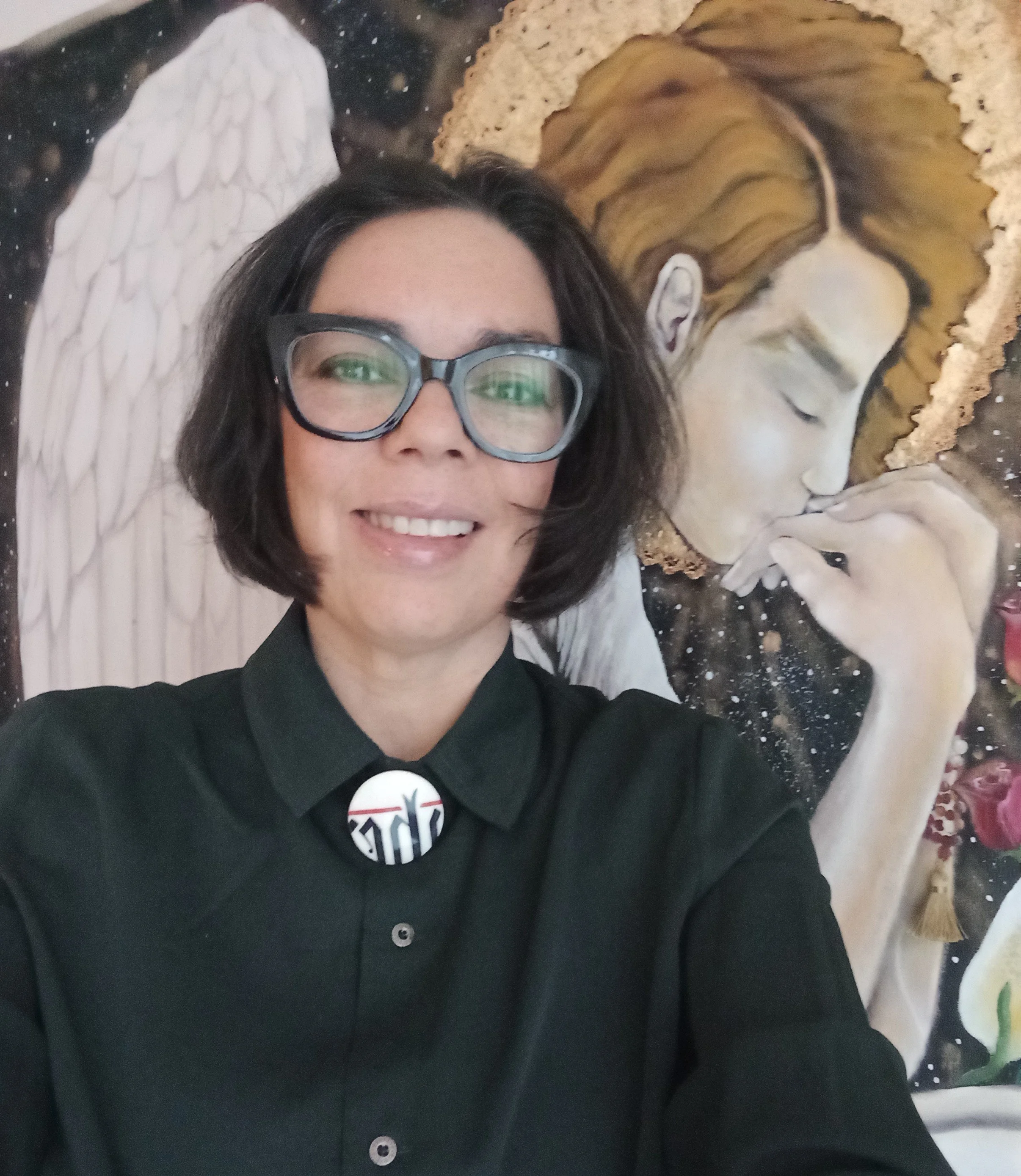
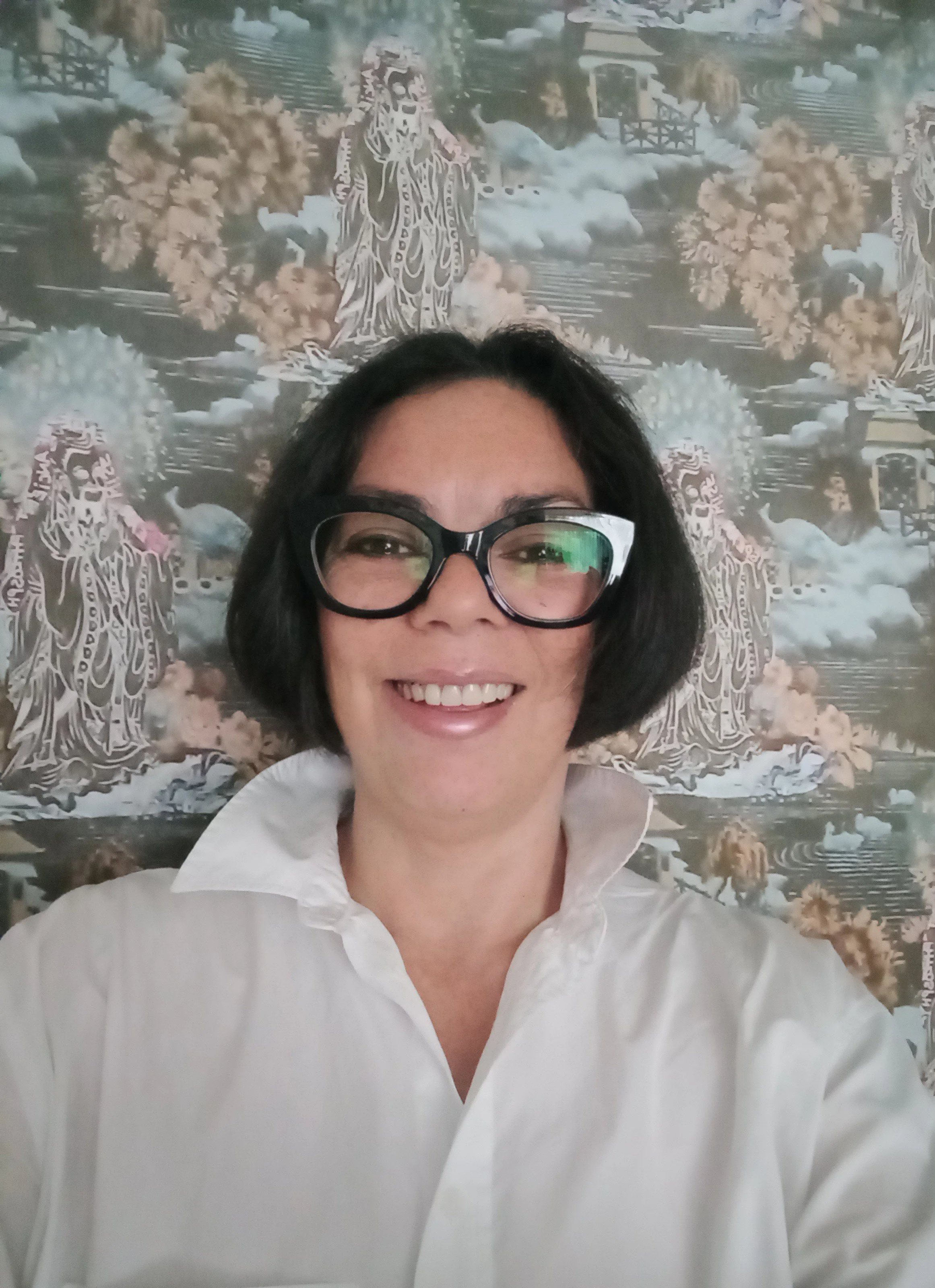
Green is a multi-disciplinary artist concerned with the art of displacement, transformation and spirituality. Using allegory as a vehicle for storytelling, her work aesthetically resides between iconography, tarot and mysticism. She has her own form of material and personal symbolism conveying hidden meanings, and her mixed-media approach functions as alchemy.
As a geo-philosopher, Green has an eclectic taste ranging from Buddhism, Gnosticism, Taoism and Jungian thought to Deleuze, Plato, Kierkegaard and Nietzsche. Influencing her life, work and informing her critical thinking. Her artistic influences are similarly eclectic ranging from the Baroque and the Art of the Occult to the Contemporary.
Green is a world builder, and her theatrical and immersive installations reflect her desire to direct her characters and story tell. Believing detailed sets fully realise bodies drive home critical thinking and engagement.
Gaining an MFA from Cambridge School of Art she maintains her studio practice in Cambridge U.K. Part of Green’s practice is socially engaged believing the arts should be accessible to everyone regardless of background or resources.
Artist Statement.
Artist Statement.
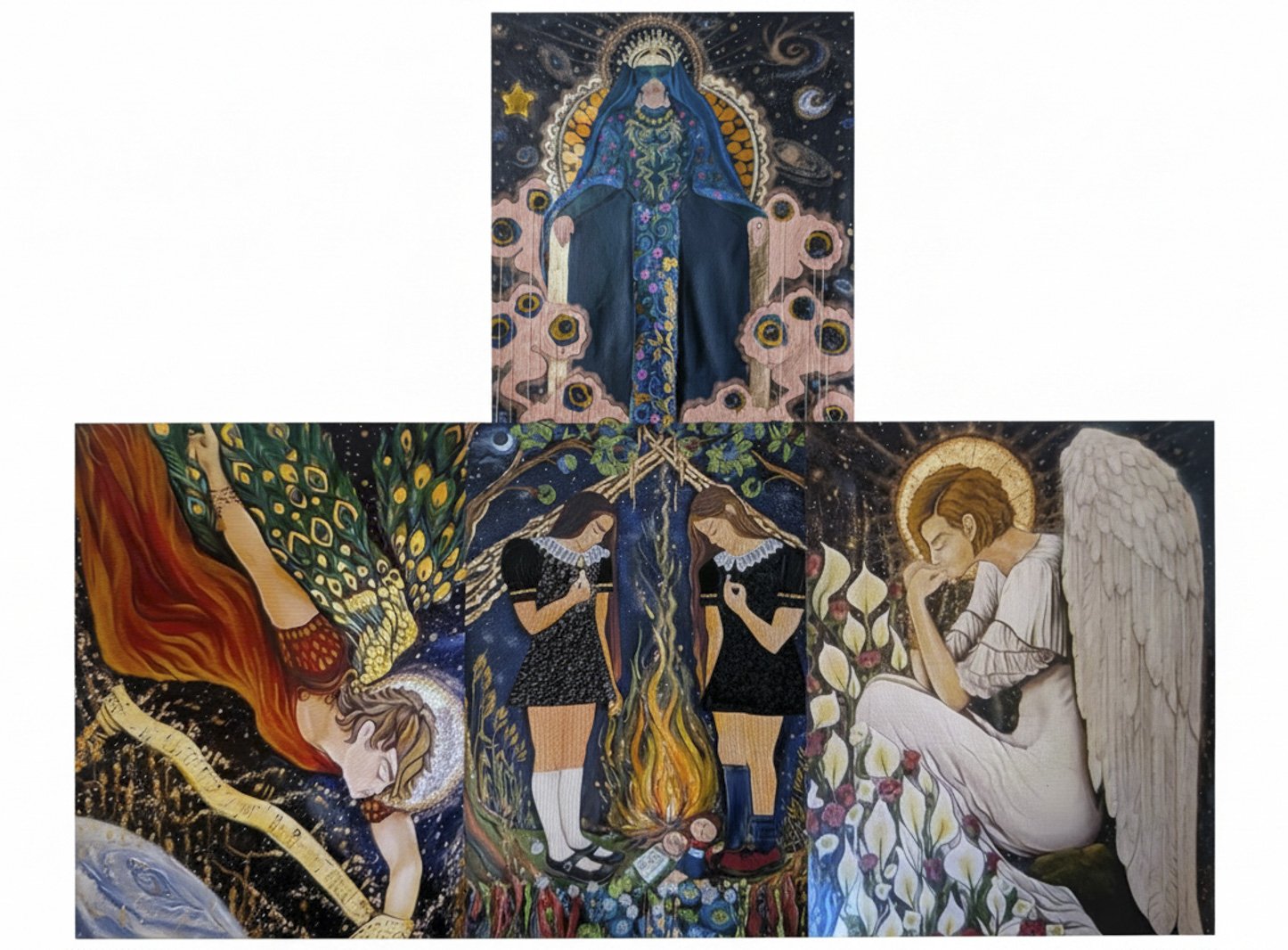
My Baroque House (Allegory) (2026)
Select pieces from my body of work 2026 make up my Baroque House Allegory.
They have been submitted to an online international artists exhibition titled The Fold with Virga Gallery.
Details on this group show to follow in September.
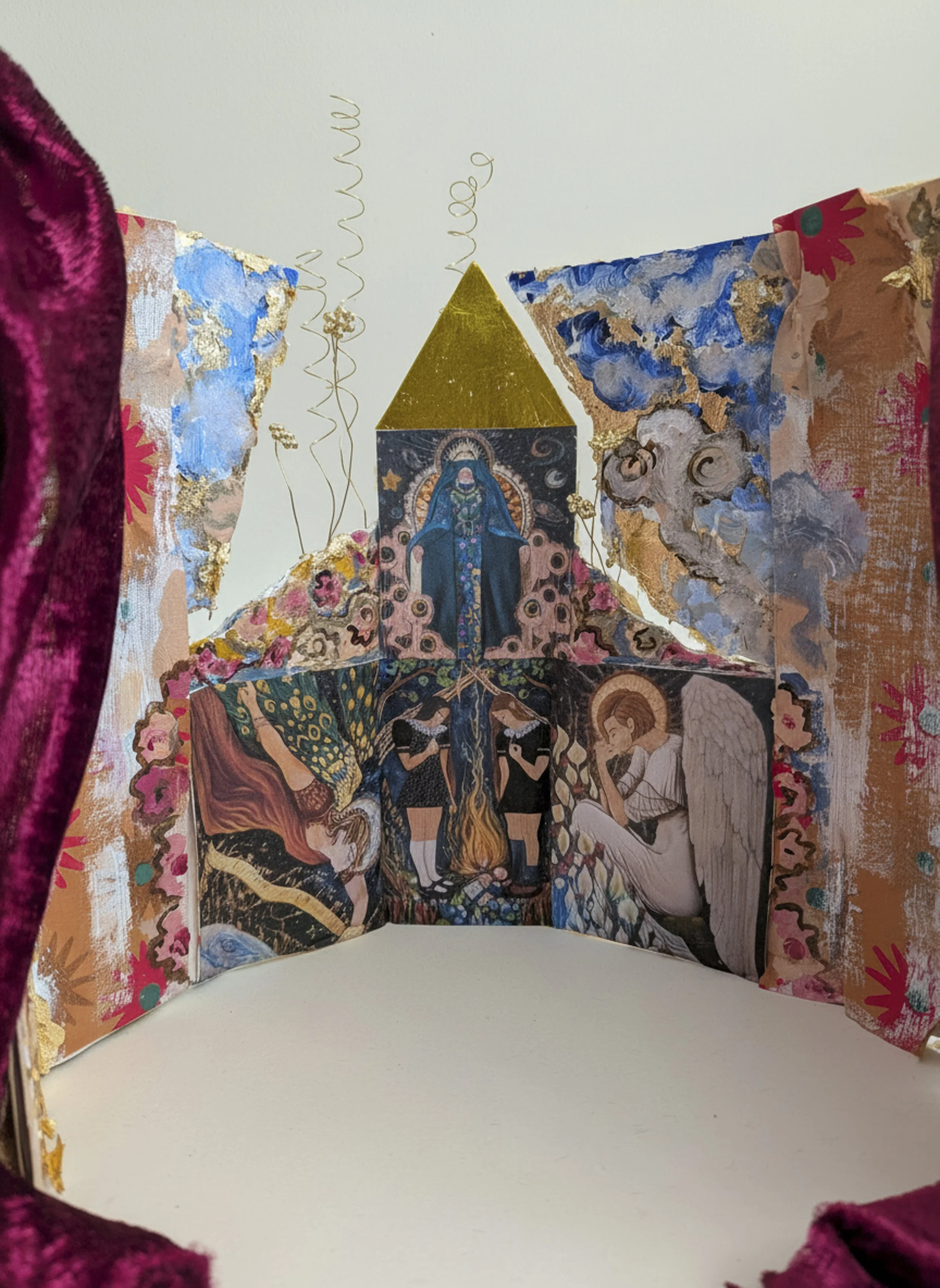
Baroque House Maquette (2026)
Choice paintings from My Baroque House-Allegory realised in maquette form. I love the theatricality and immersive quality of this and it speaks to me in so many ways because it expresses important philosophical themes in Deleuze’s The Fold.
I think of old ruins and ancient sites. Decay and impermanence. I grew up on the site of an old priory, and am drawn to ancient things. I think of my childhood home I loved and had to leave never to return.
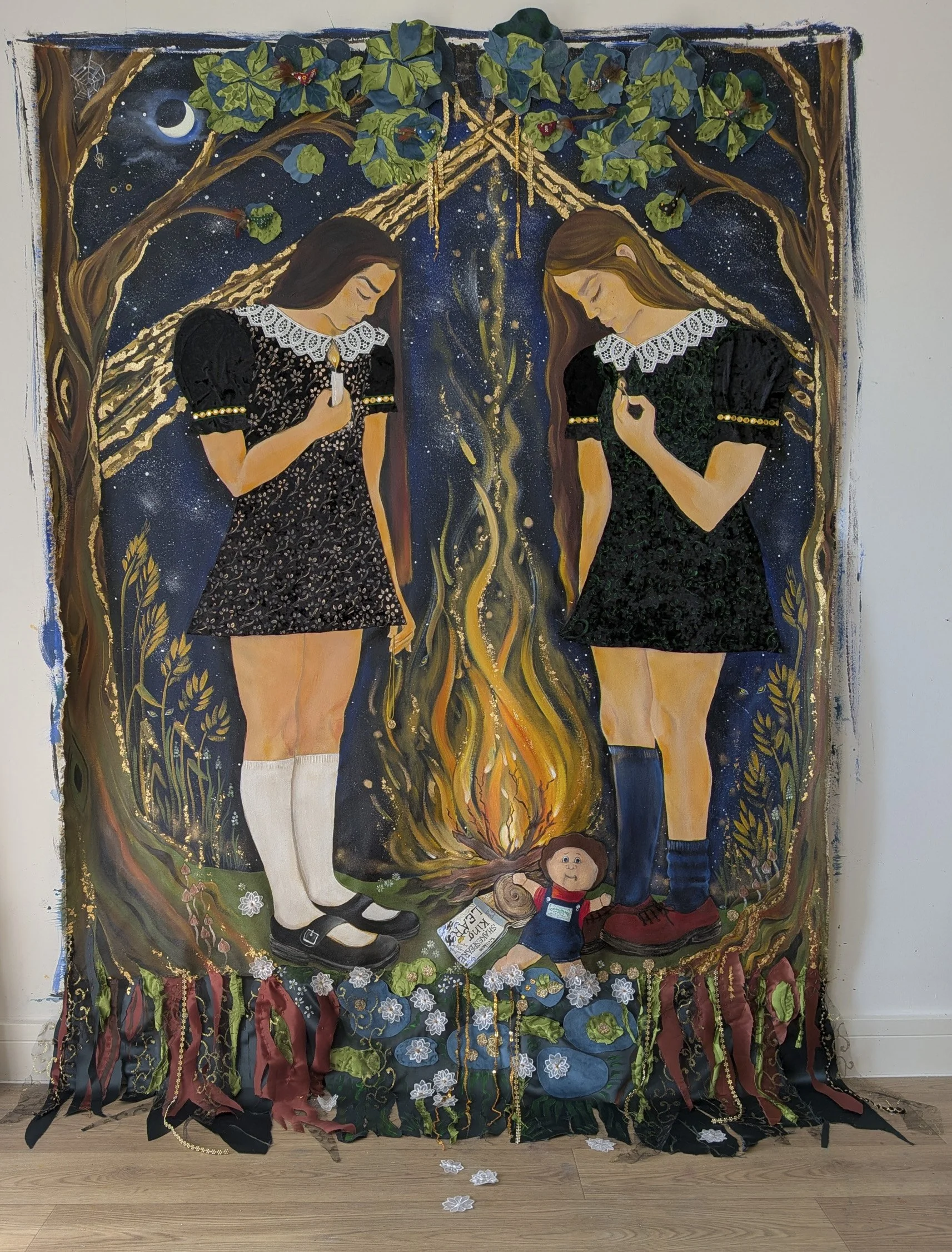
Tonight we sleep under the stars (2026)
Acrylic, velvet, silk, lace, appliqué, beading, gold gilding, antique gold gilding wax, textile birds, bells, feathers, embroidery thread and joss paper on unstretched canvas.
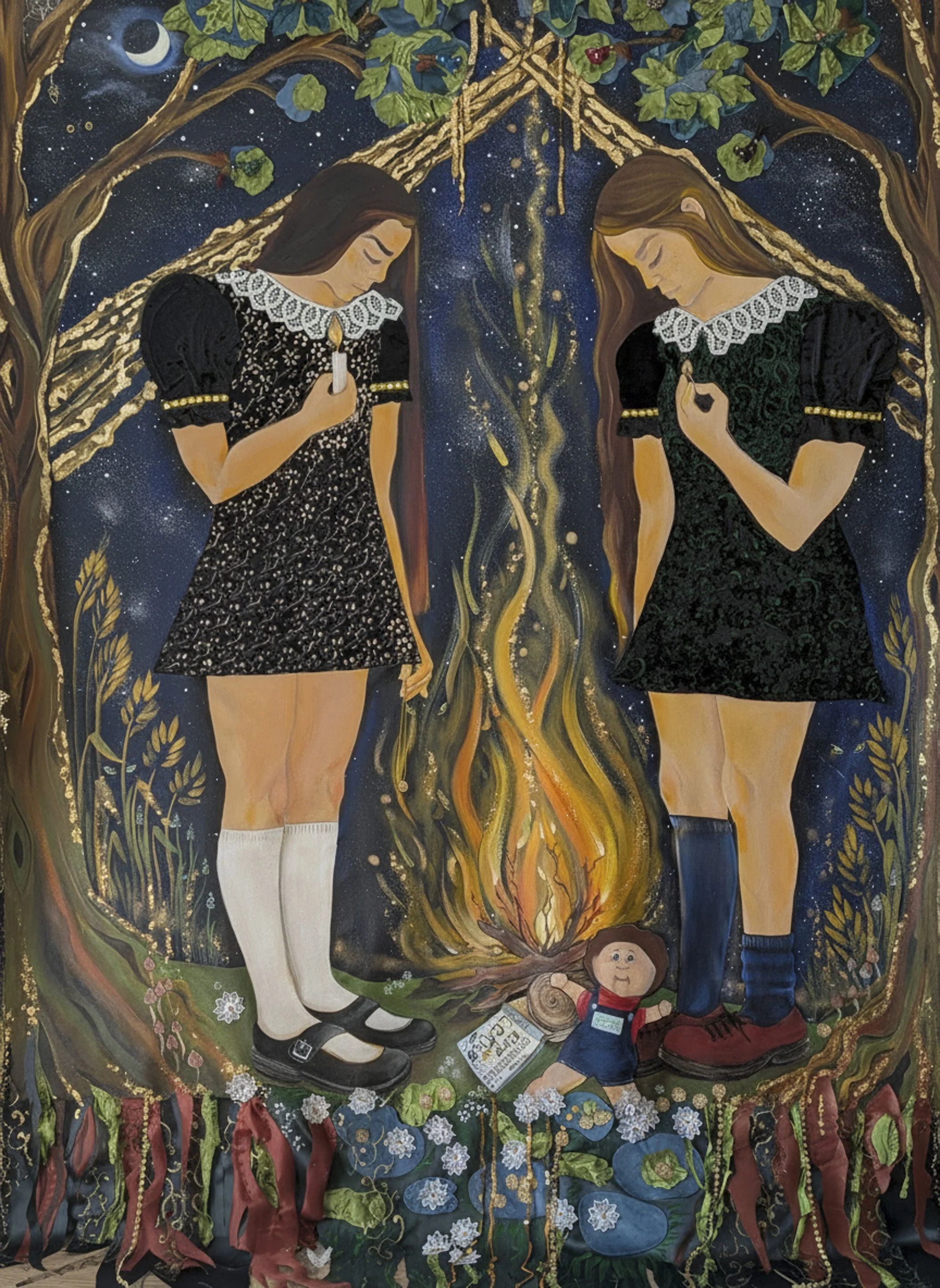
Detail from “Tonight we seek shelter under the stars” (2026)
Acrylic, velvet, silk, lace, feathers, bells, beading, textile birds, mirrors, sequins, embroidery thread, gold gilding and antique gold gilding wax on unstretched canvas.
Dimensions: L 2m 28cms x W 1m 63cms
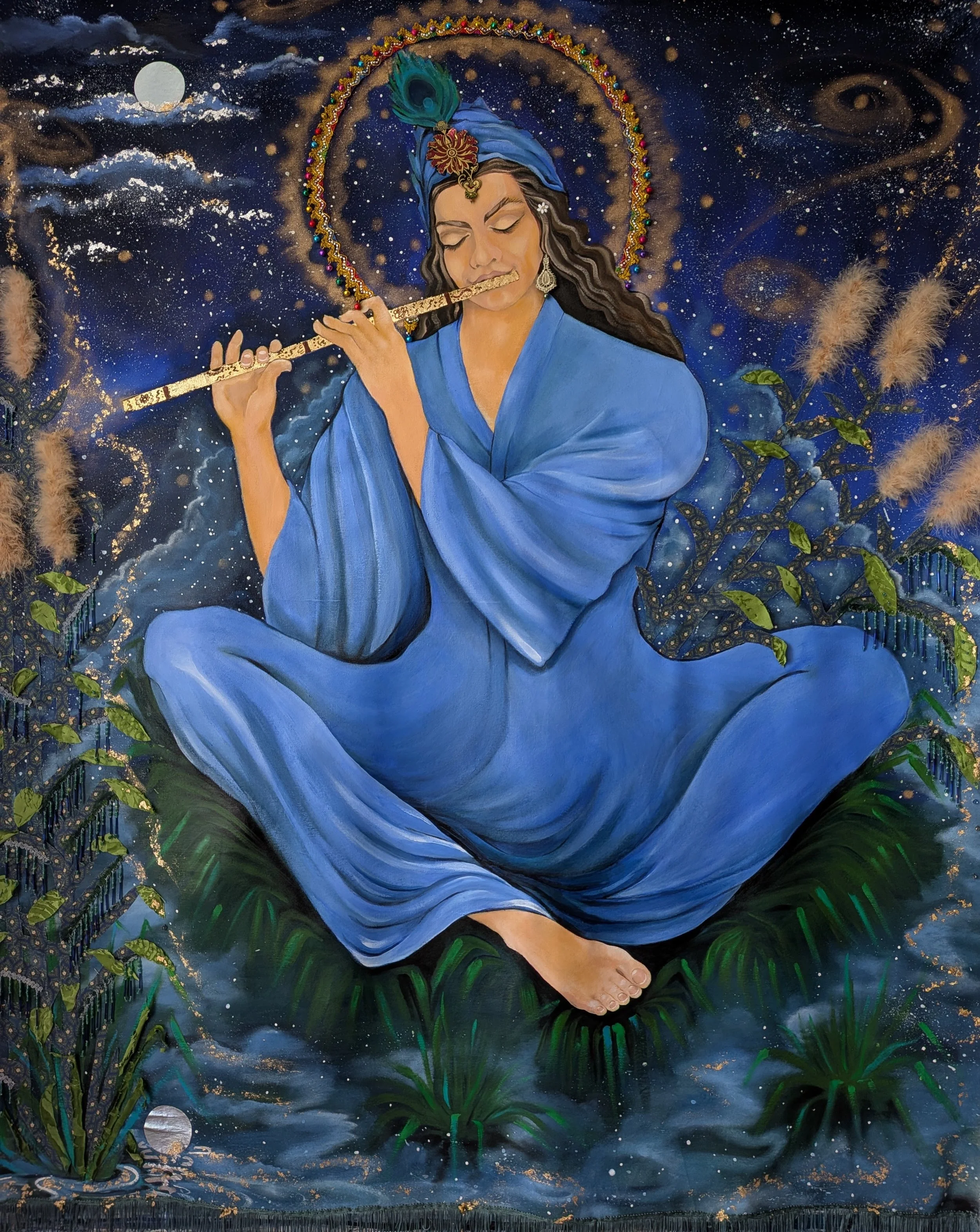
“Longing to return to Source” (2026)
Acrylic, textiles, beads, gold gilding, joss paper embroidered lace and bells with fringing on unstretched canvas.
Dimensions: L 1m 90cms x W 1m 57cms
The two pieces above are my most recent works from my body of work 2026. It is always an intention that my work evolves and criticality coupled with regular studio crits are vital for progress.
In “We seek shelter under the stars” I express my first experience of displacement at 16. My essay on this piece and a more detailed insight into my materials, process and why this piece is an important turning point will be published here.
In “Longing to return to Source” it embodies this seasoned nomads philosophy on displacement. How even though we may be displaced, the act of creating is connection to true source. Rumi’s flute, a hollowed out reed cut from the reed bed plays the most beautiful music longing to return to Source. I am also interpreting Gilles Deleuze’s philosophy on Deterritorialization and Reterritorialization in a more universal way here.
“The answer my friend is blowing in the wind” (2026)
Third space installation.
This documented installation fully realises Deleuze's philosophy on Deterritorialization and Reterritorialization.
It is the language of displacement, the geo-philosopher and the nomad.
Rumi’s flute is a hollowed out reed cut from the reed bed that plays the most beautiful music longing to return to Source…home. Yet on a deeper level, connecting to Source, oneness and essence is self-realisation and an awakening. We are all Source. As diaspora this can be comforting.
Temporary installations can challenge conventional ideas of permanence, legitimacy and public engagement. Moving between artistic practice, critical institutional thinking and curatorial strategy creates this fleeting event whose transient nature is integral to its meaning.
My Third Space installations align with my afor mentioned principles and experience.
I deliberately work on unstretched canvases with this in mind.
Body of work 2026
Body of work 2026
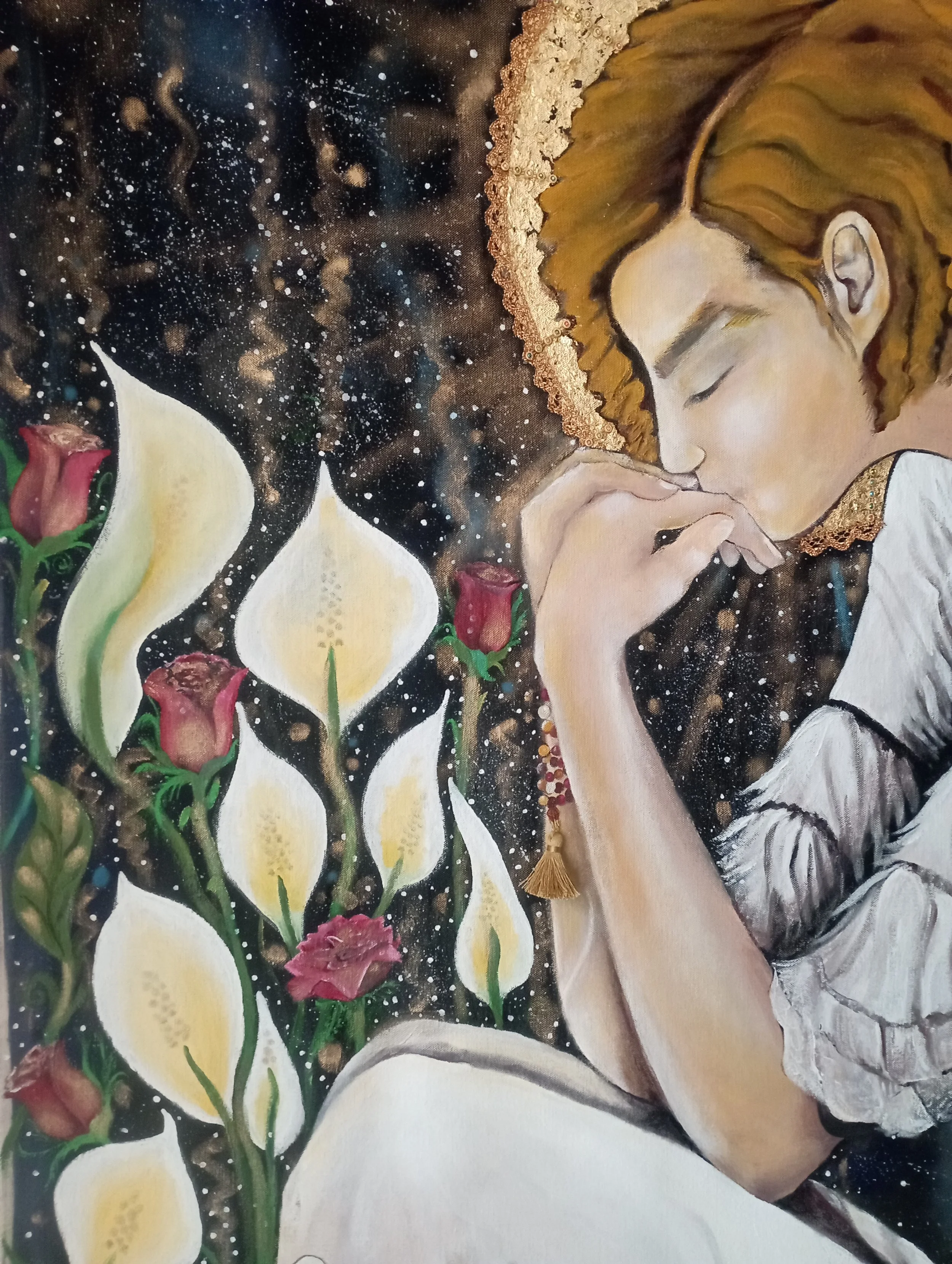
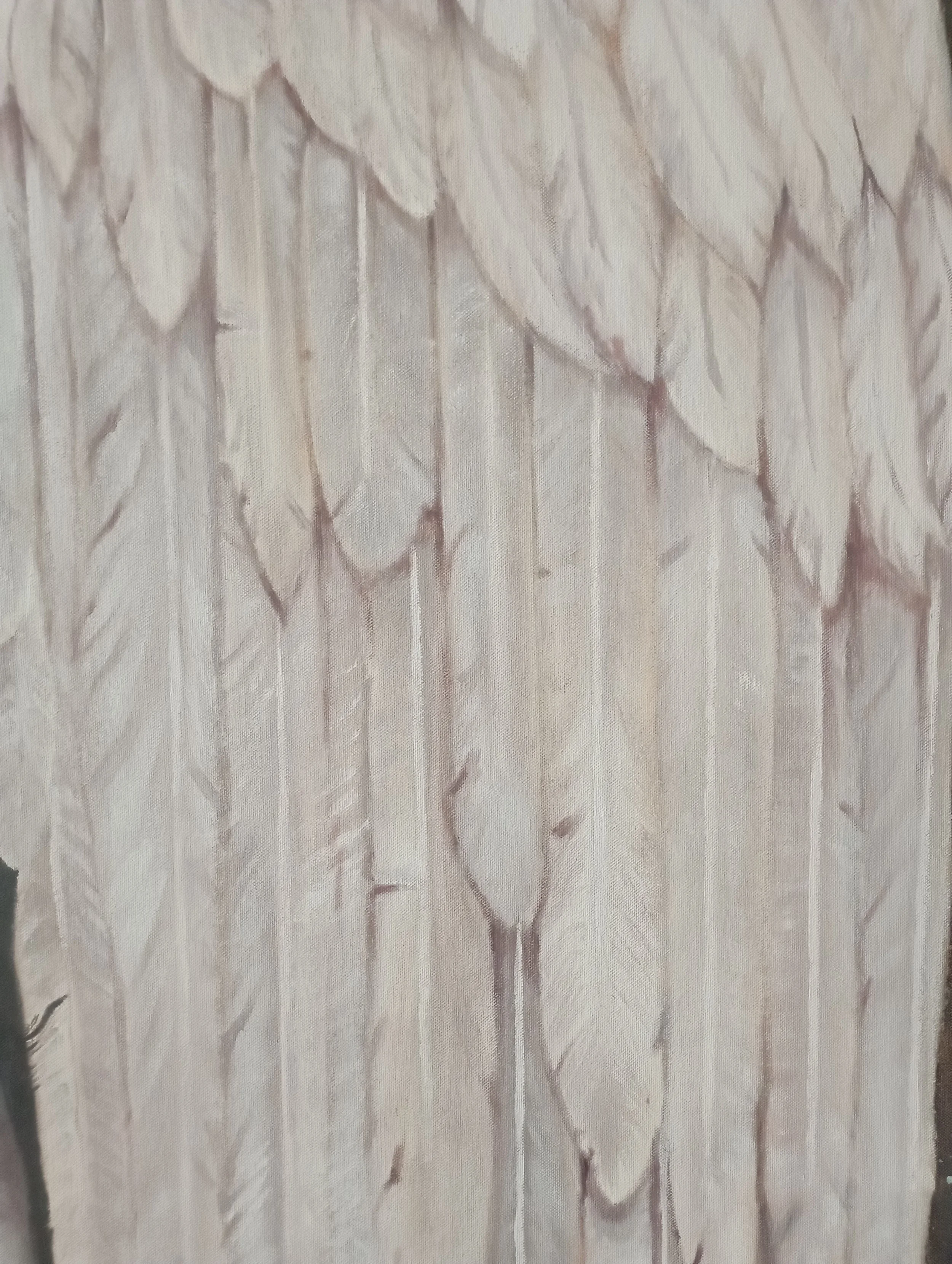
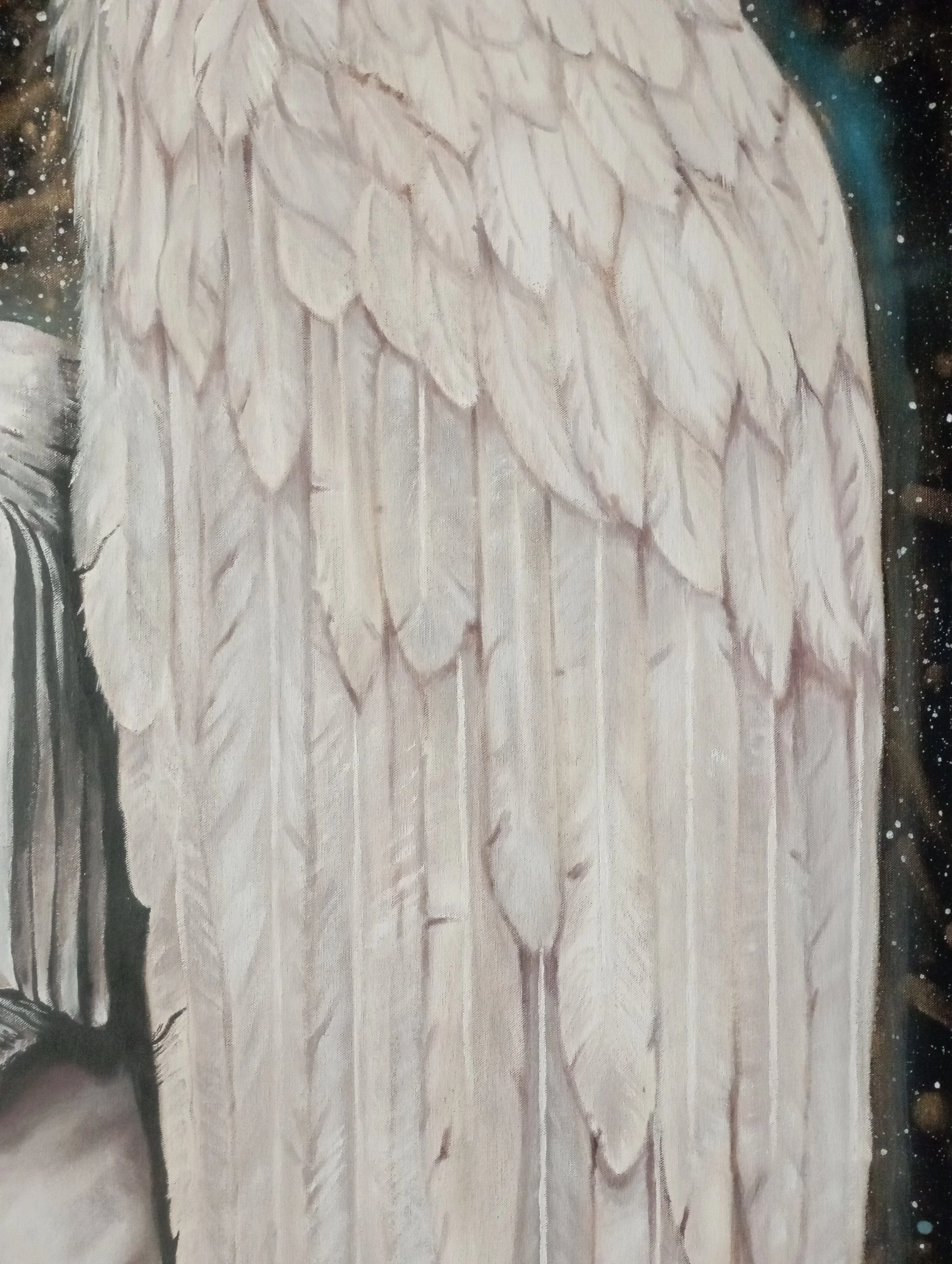
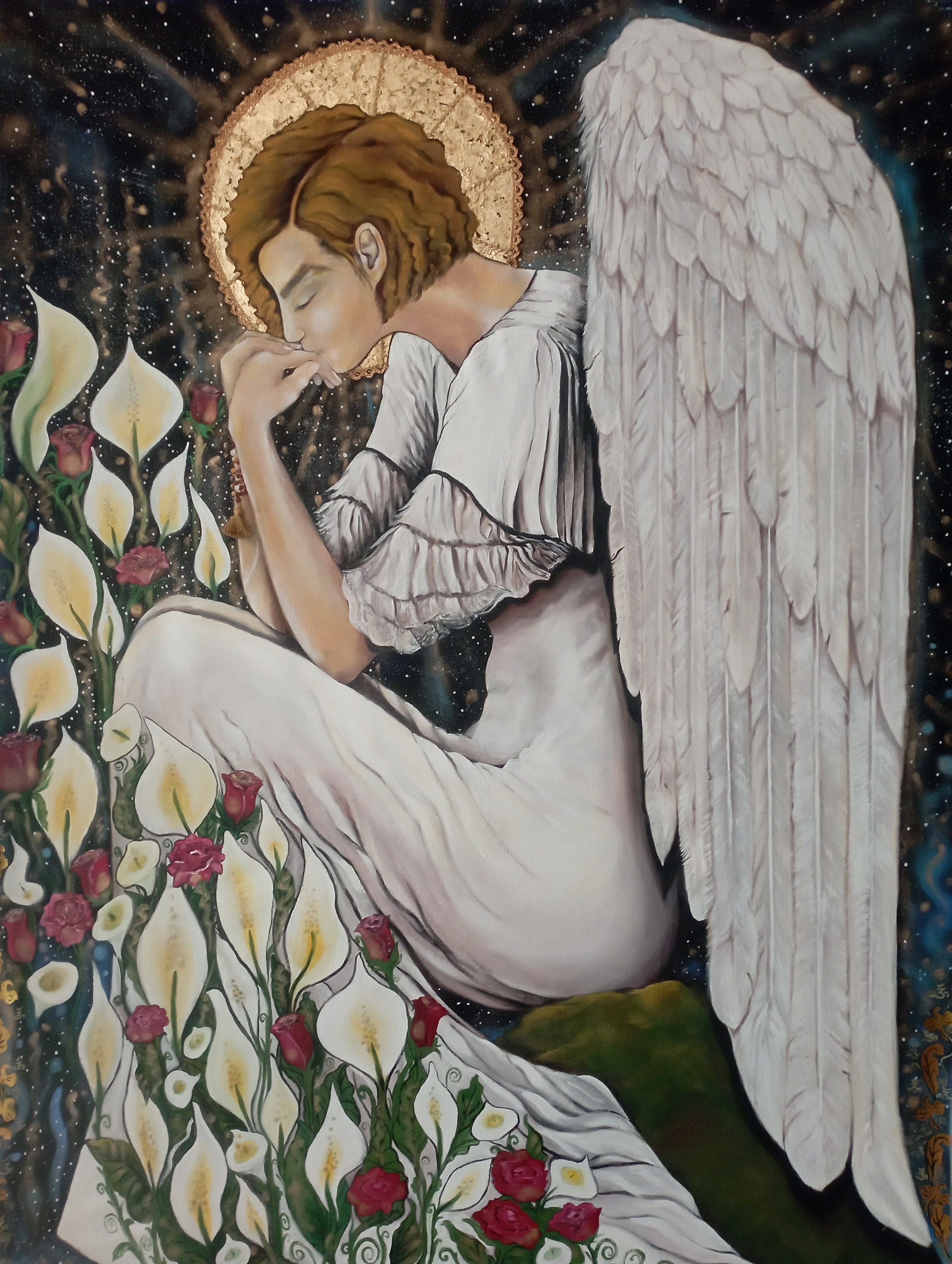
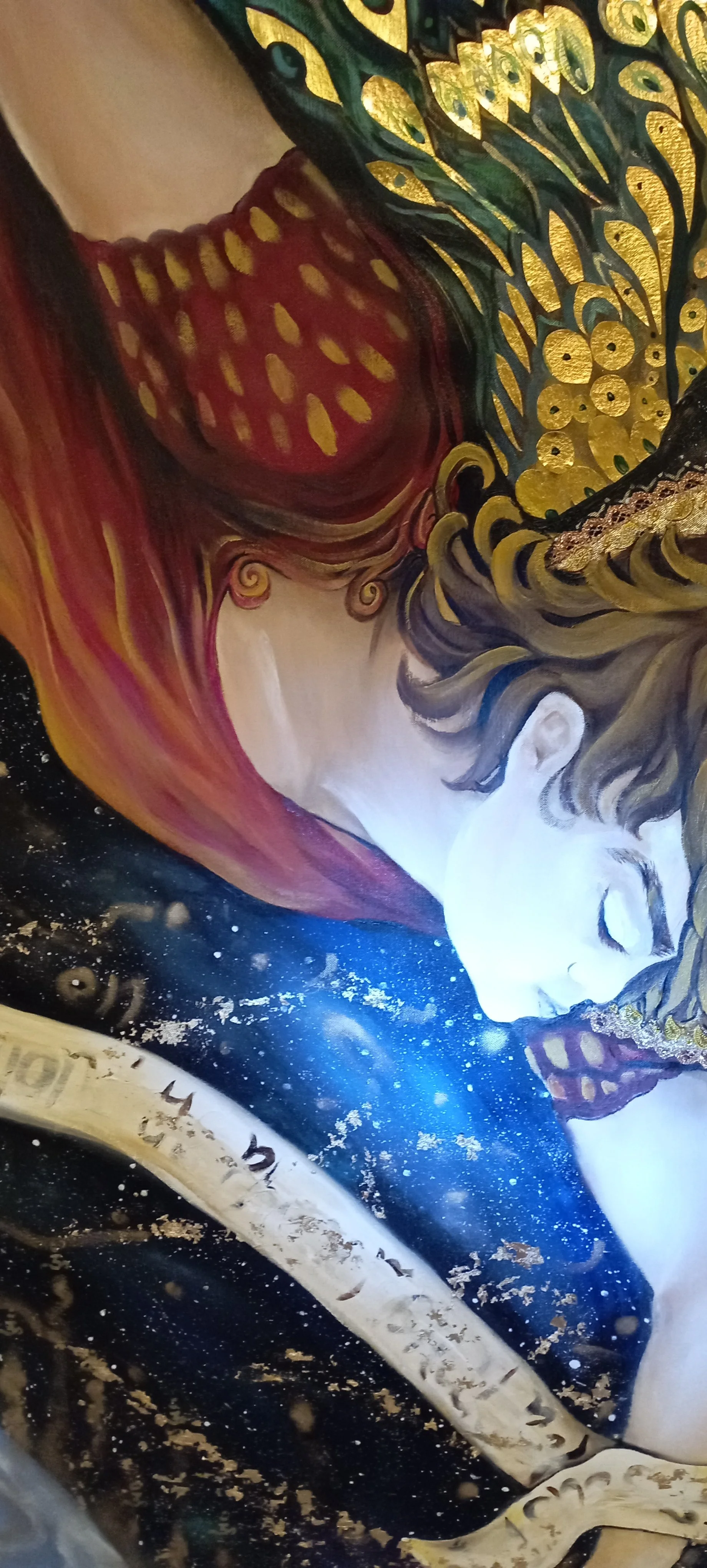
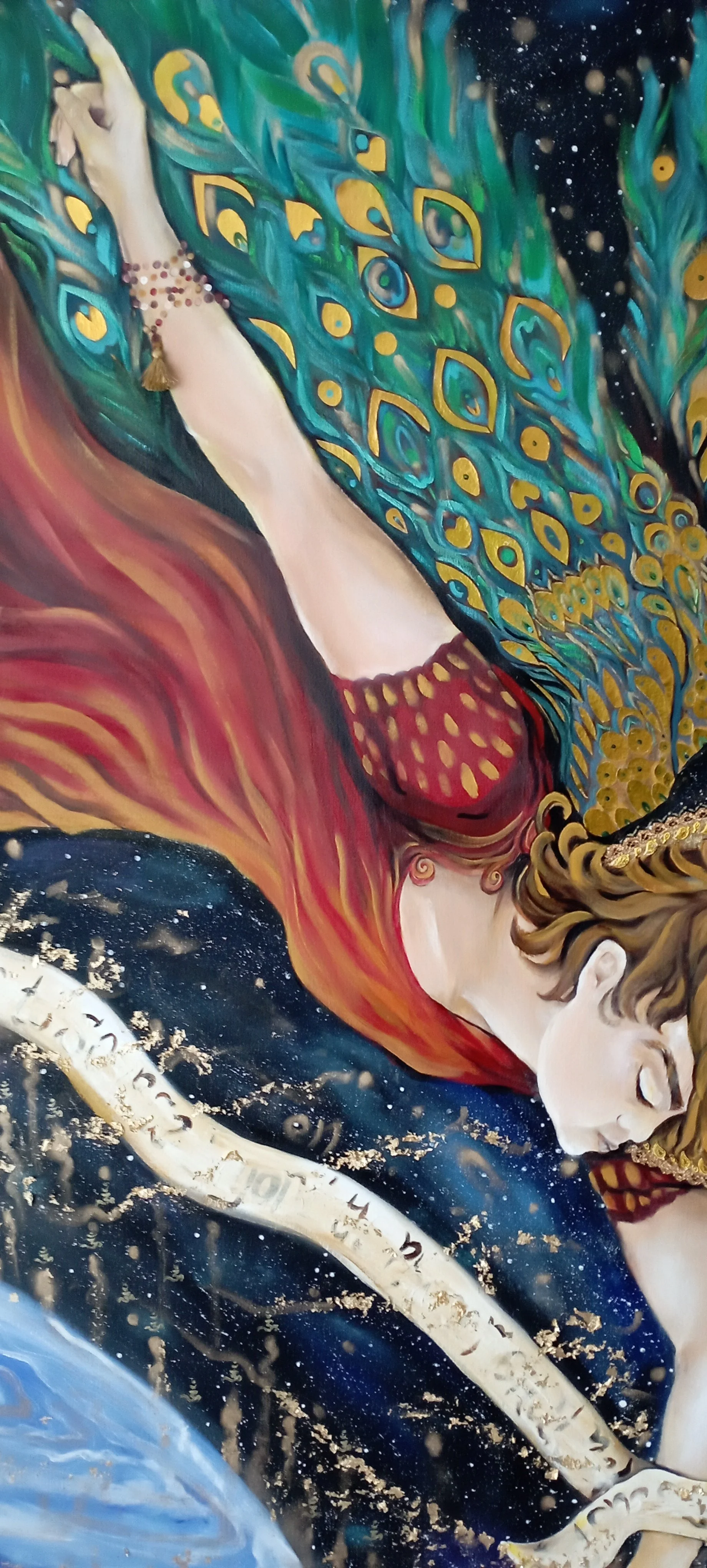
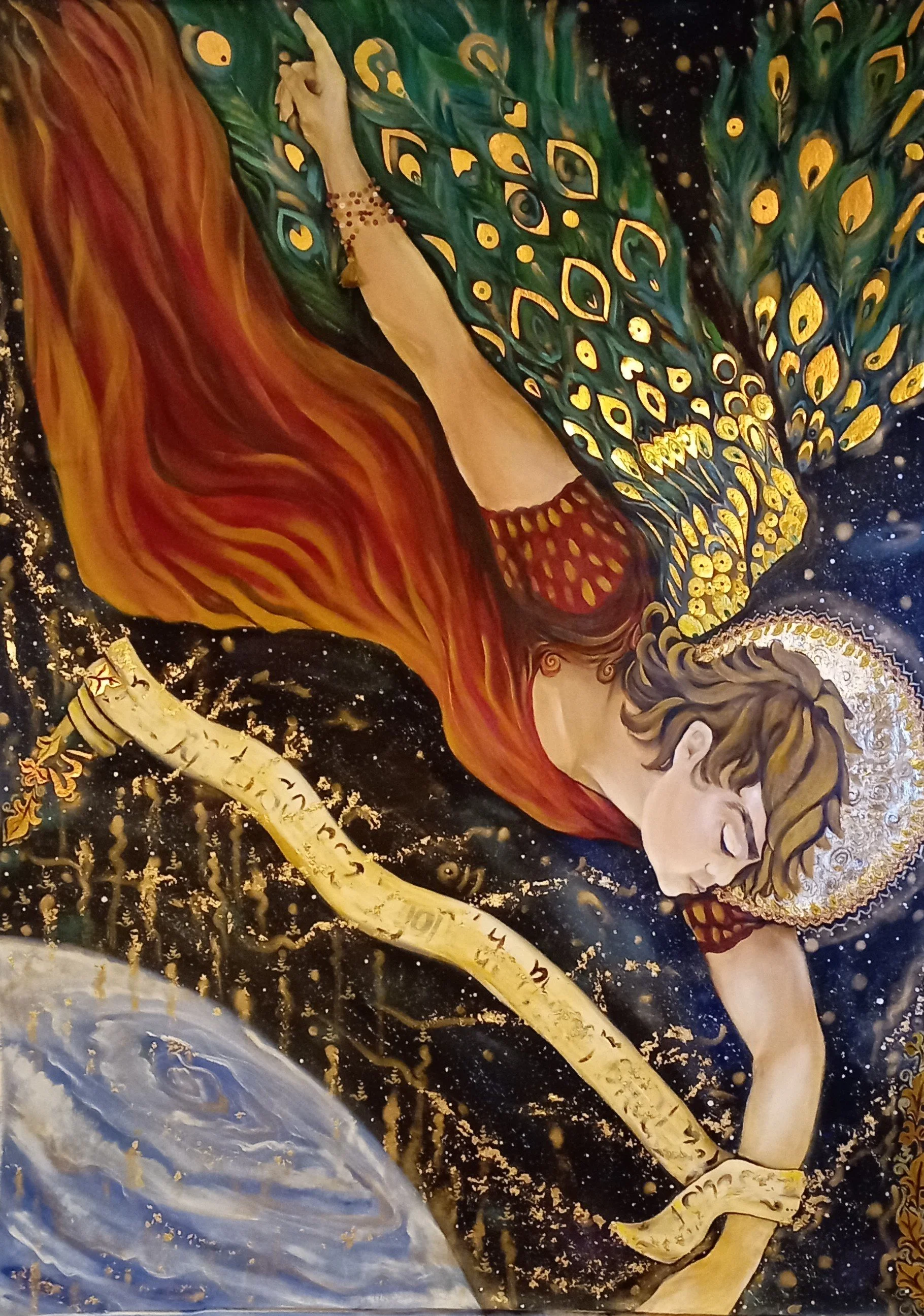
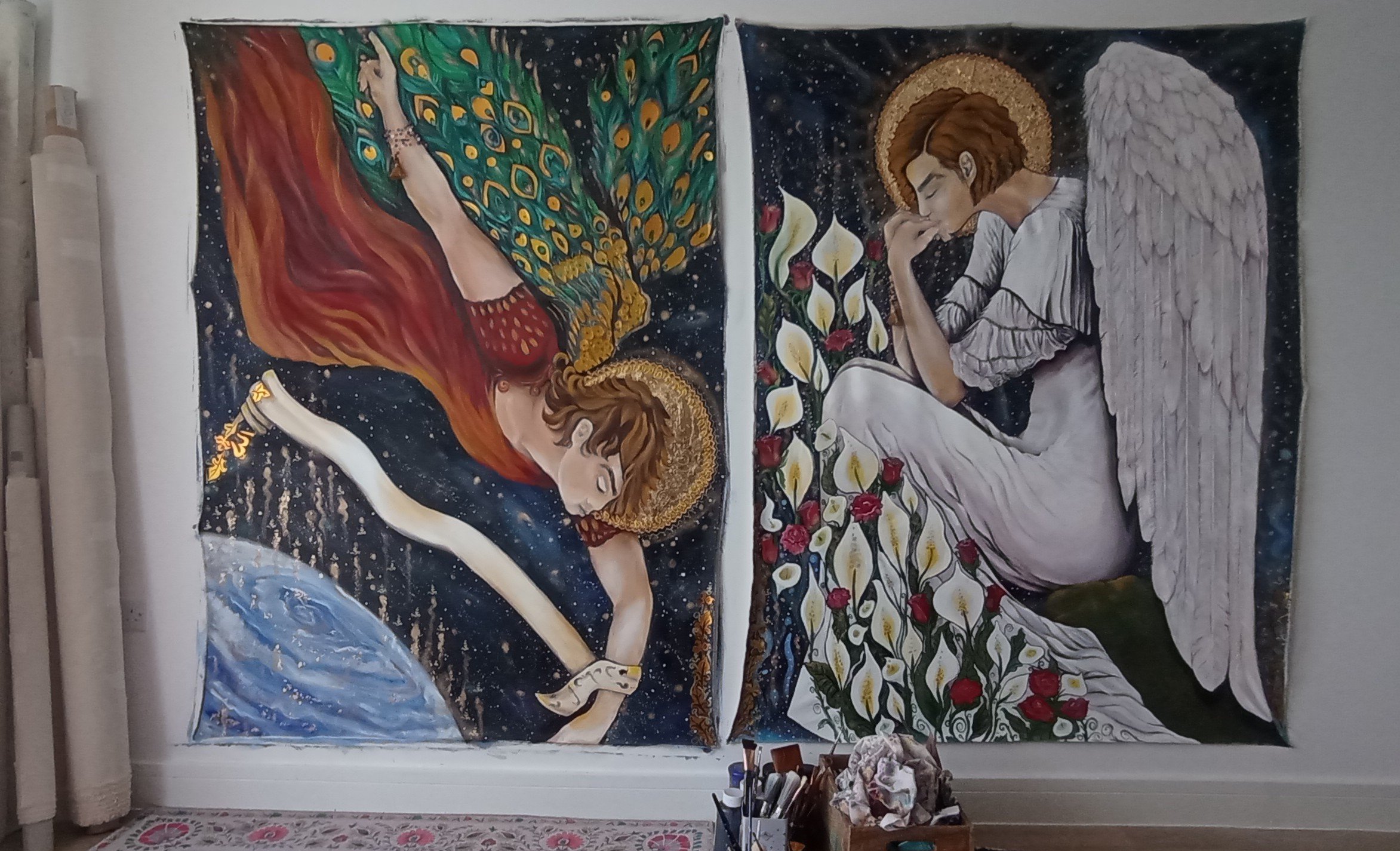
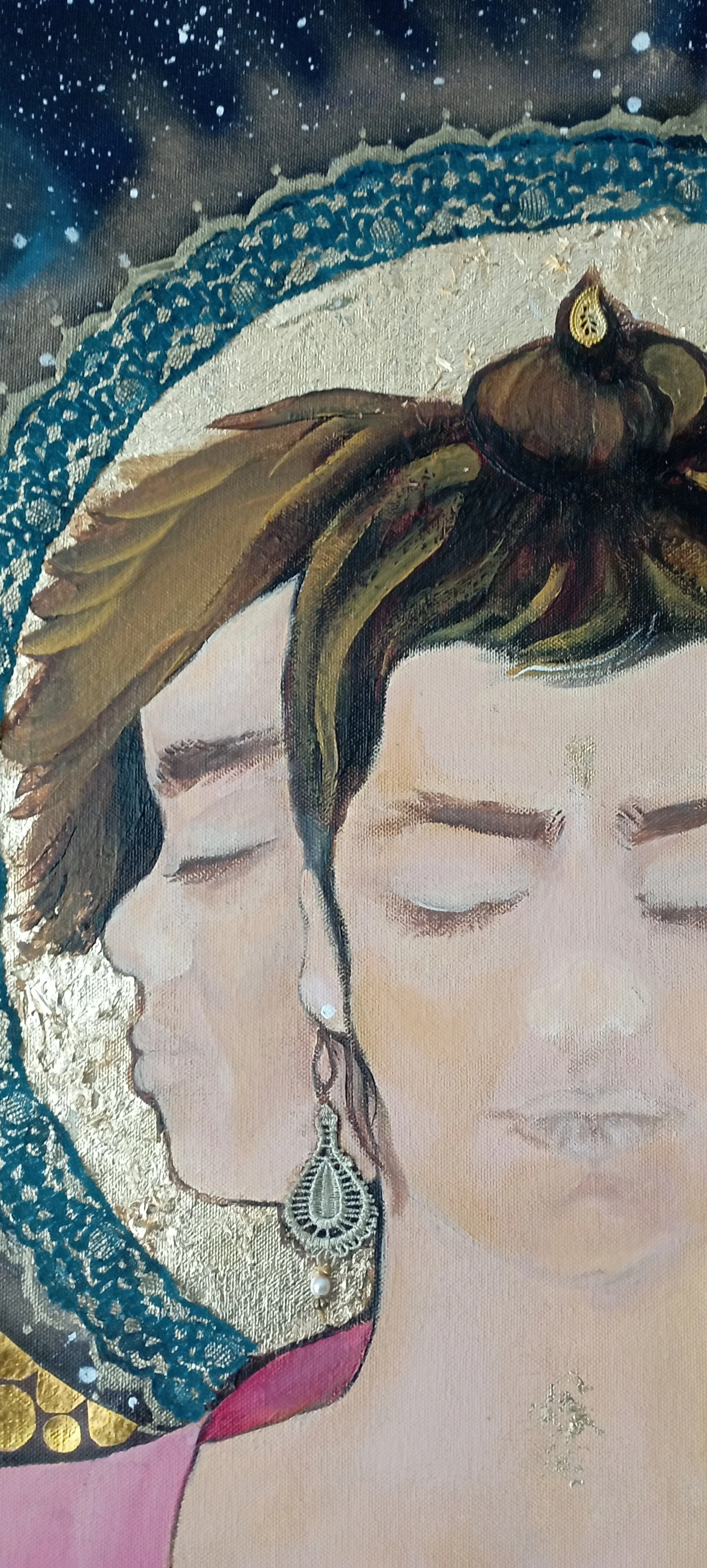
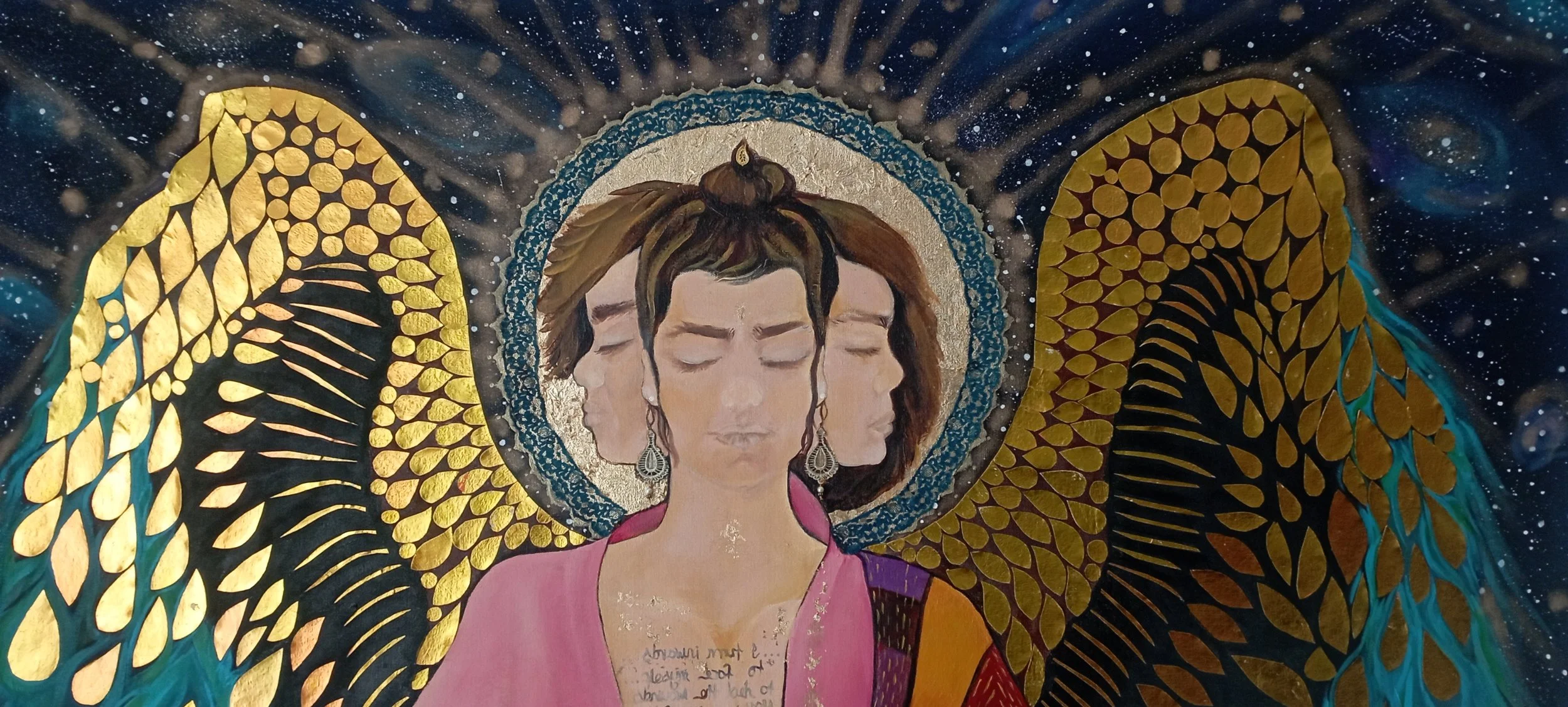
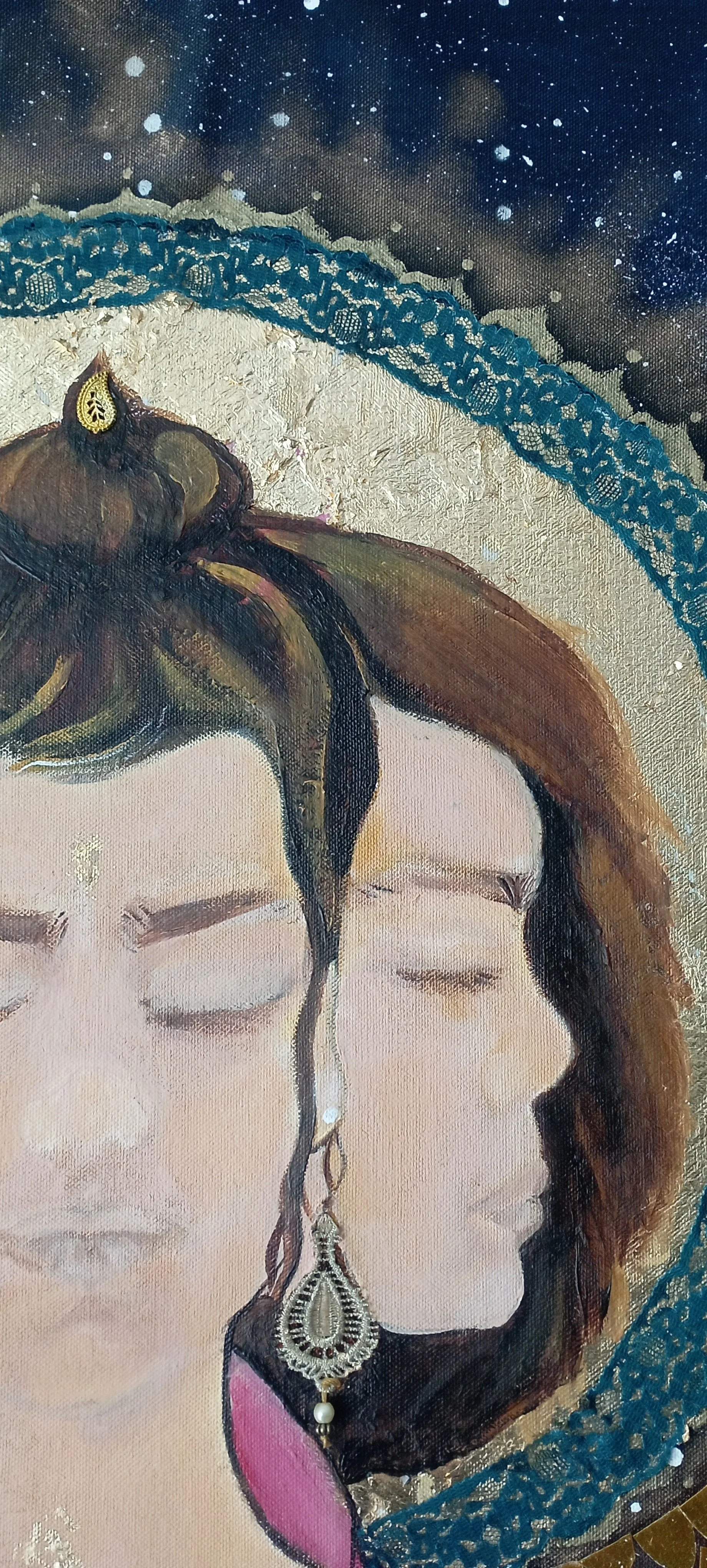
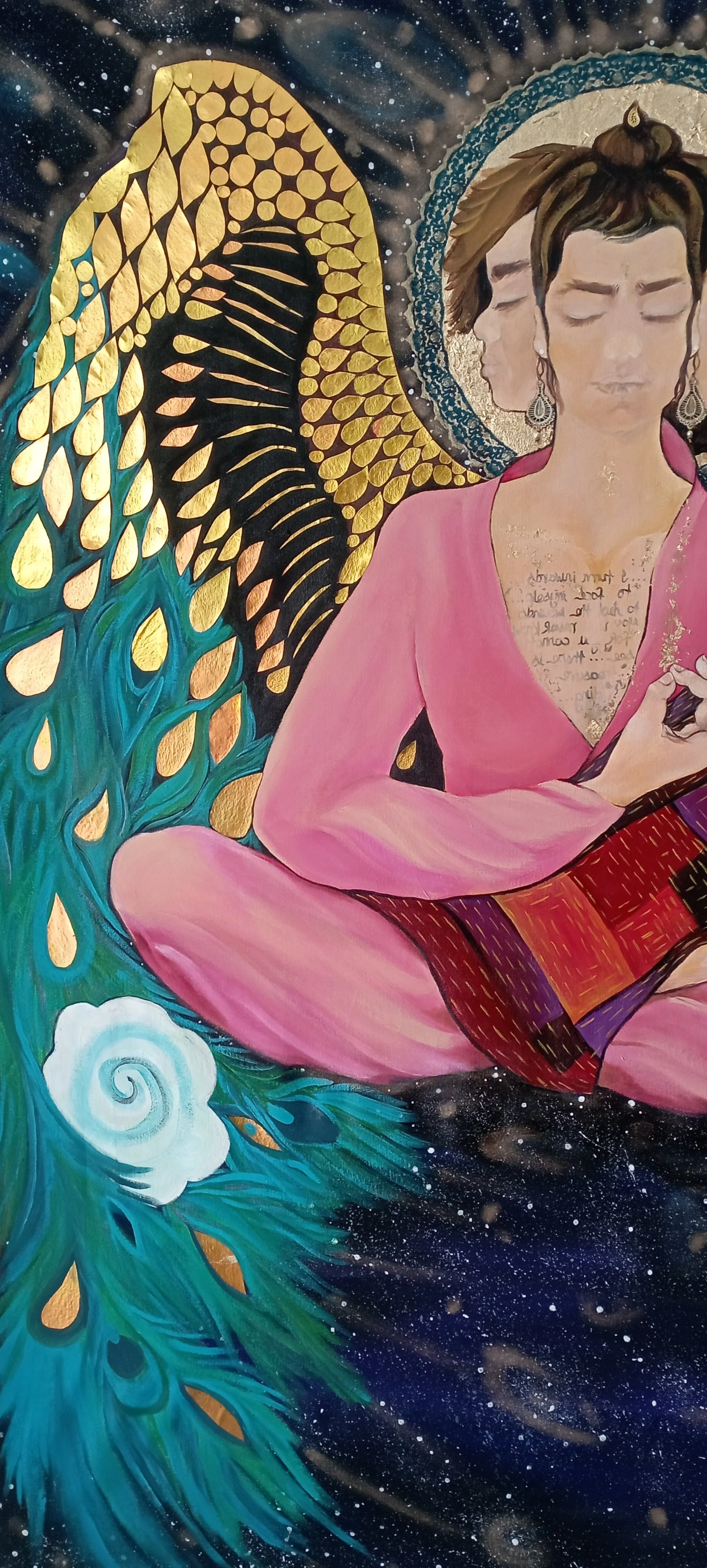
Cosmic Angels.
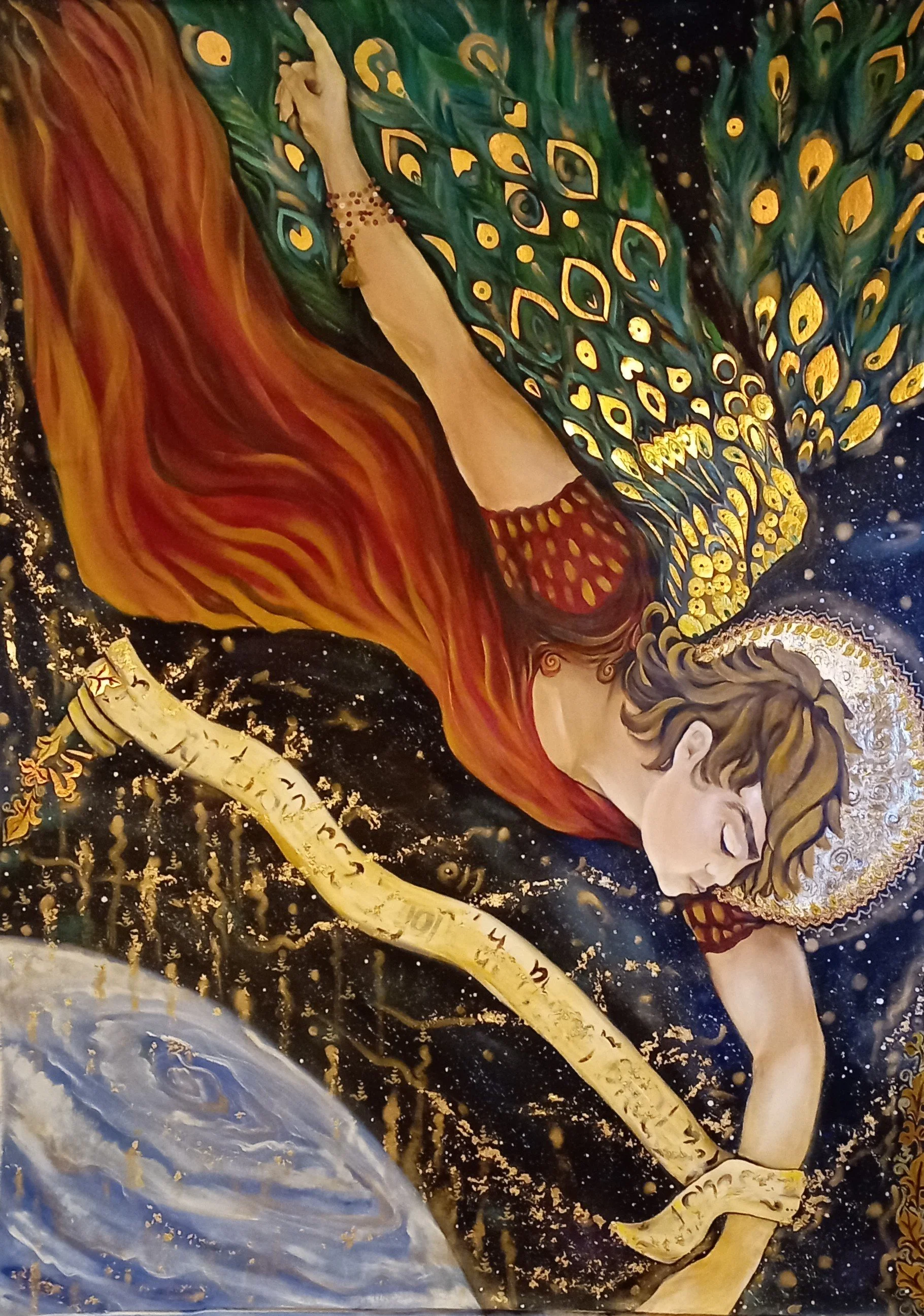
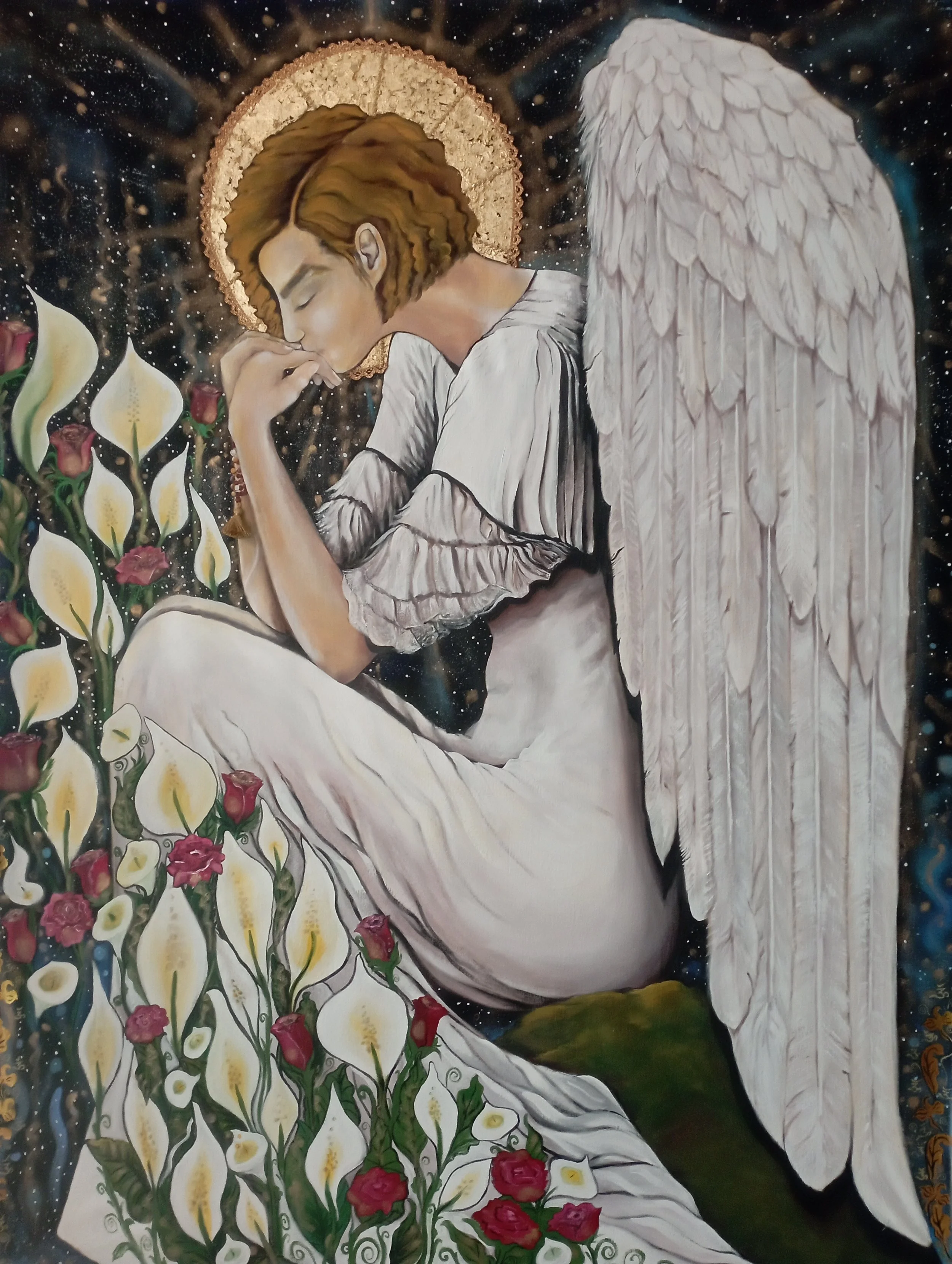
The cosmic dual angels above shown together reflect yin yang symbolism, light and dark, male and female expressing duality. The androgenous appearance of my angels intentionally conveys transcendence of any singular identity.
We are all made of light and dark which is our dual nature, and it is only in the darkness that we find the light. A frequent personal statement and theme informed by my personal transcendence and recovery from the trauma of displacement. Belonging, returning and remembering are important.
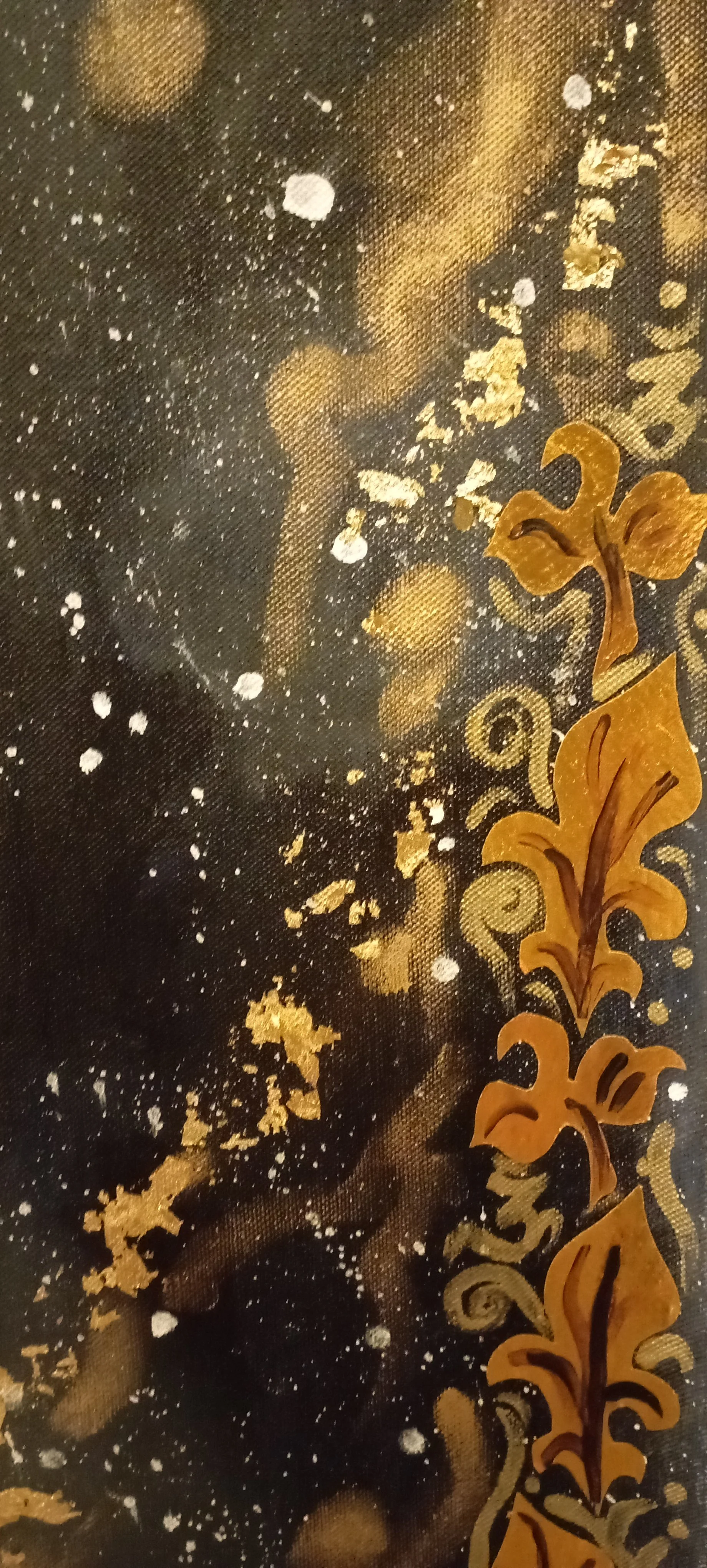
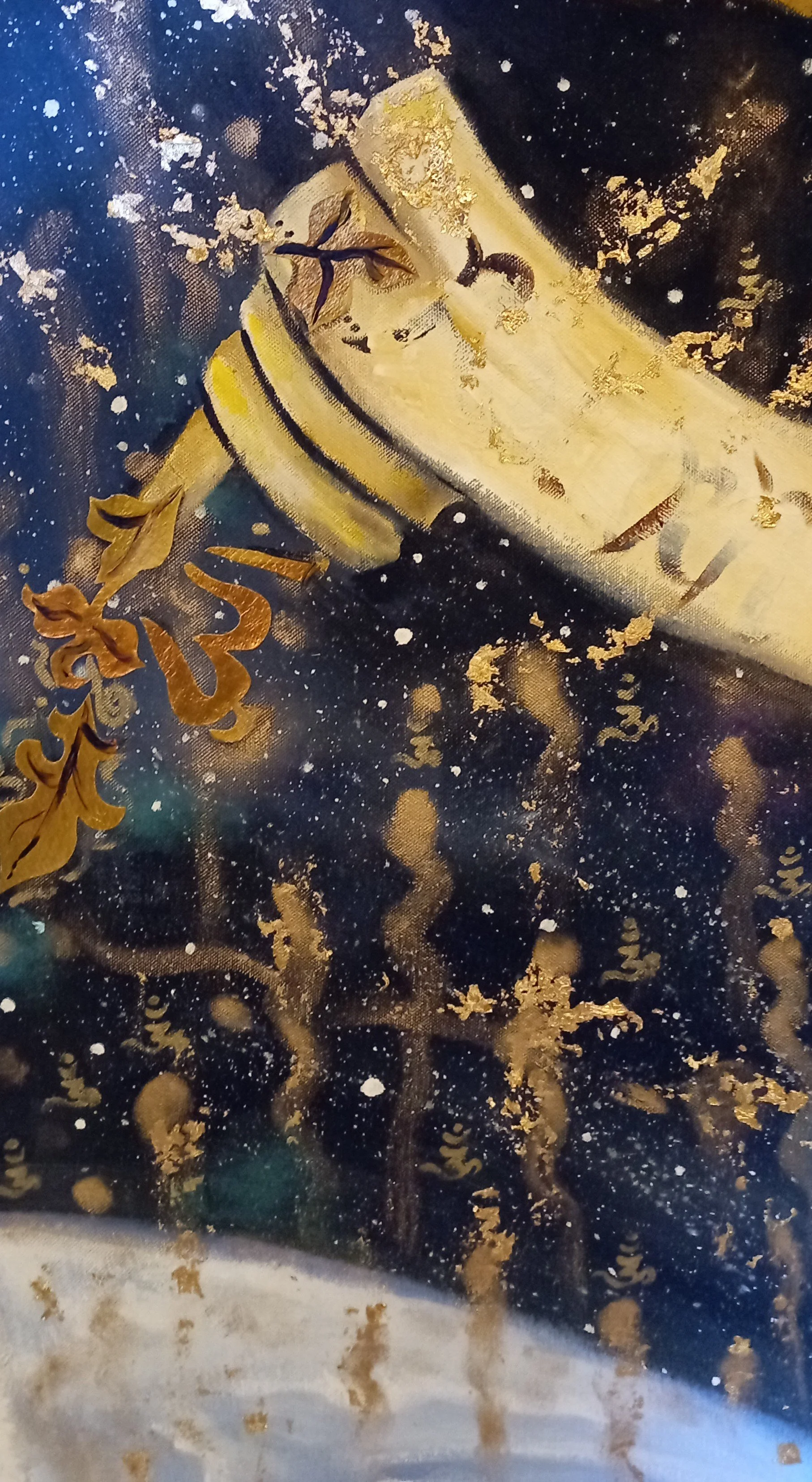
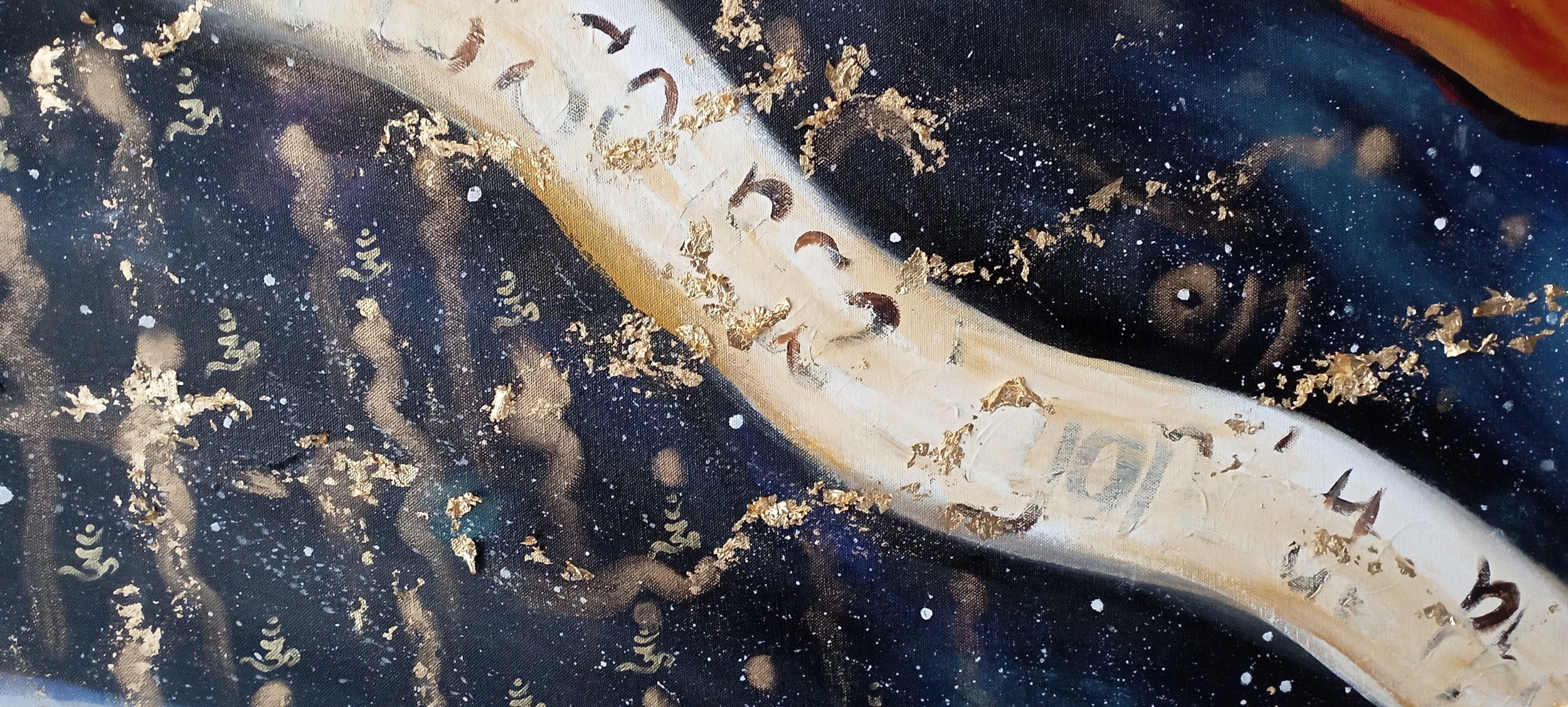
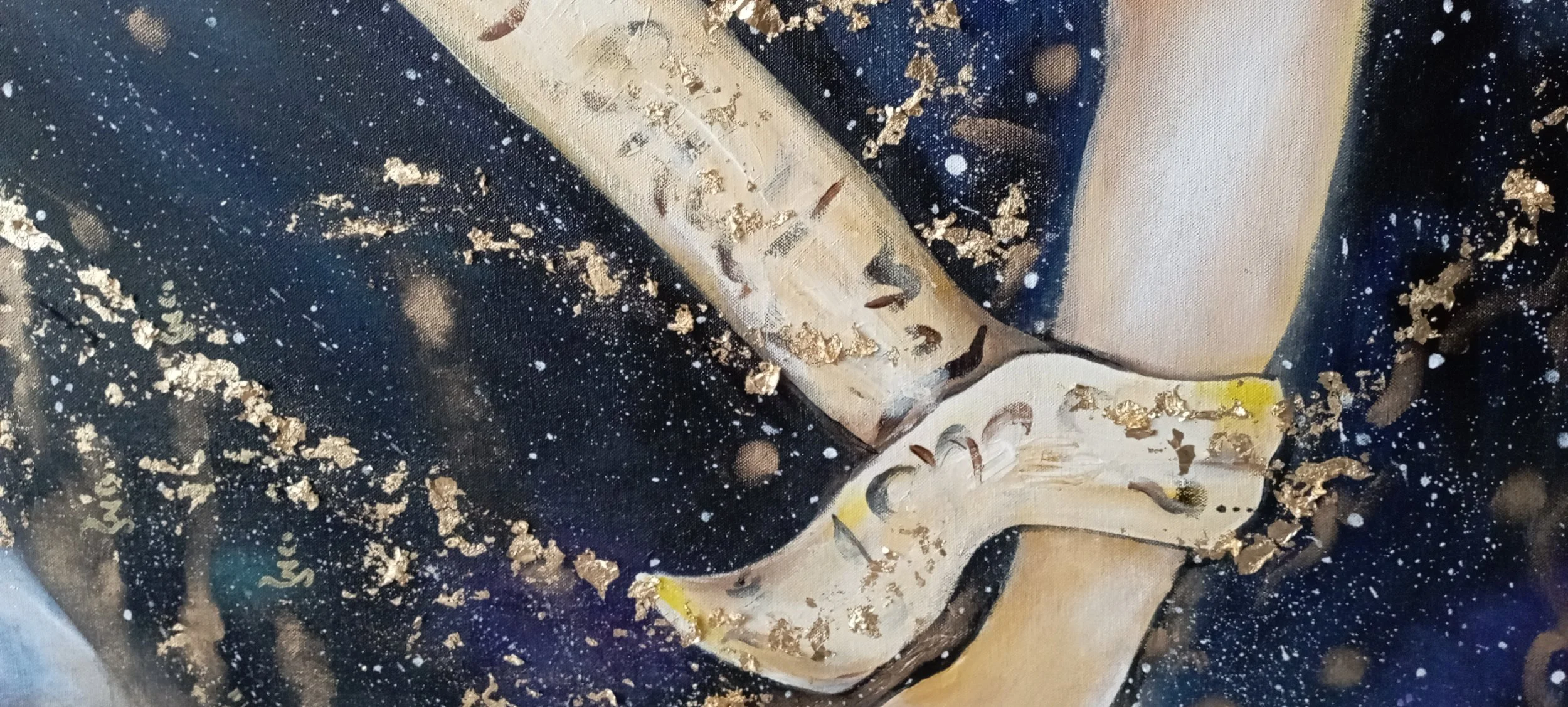
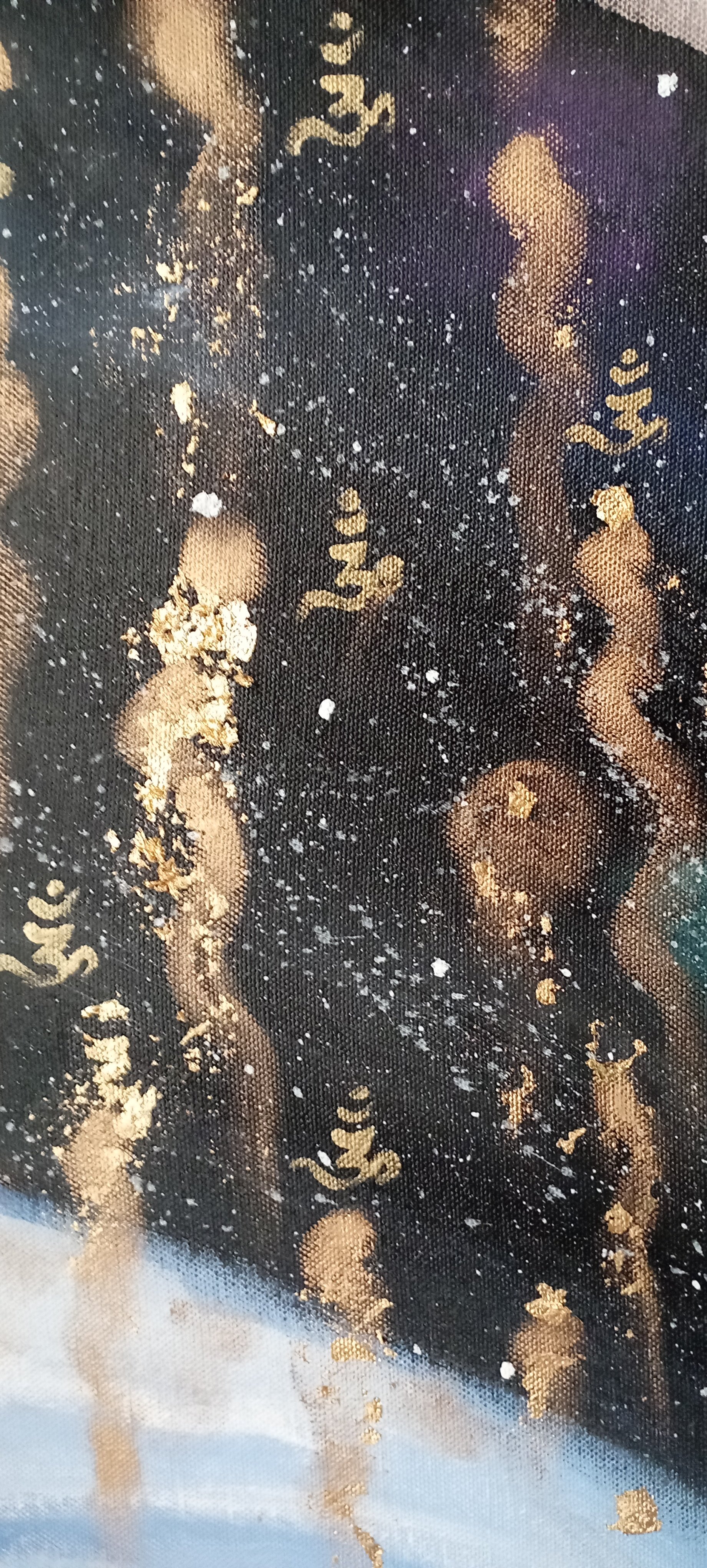
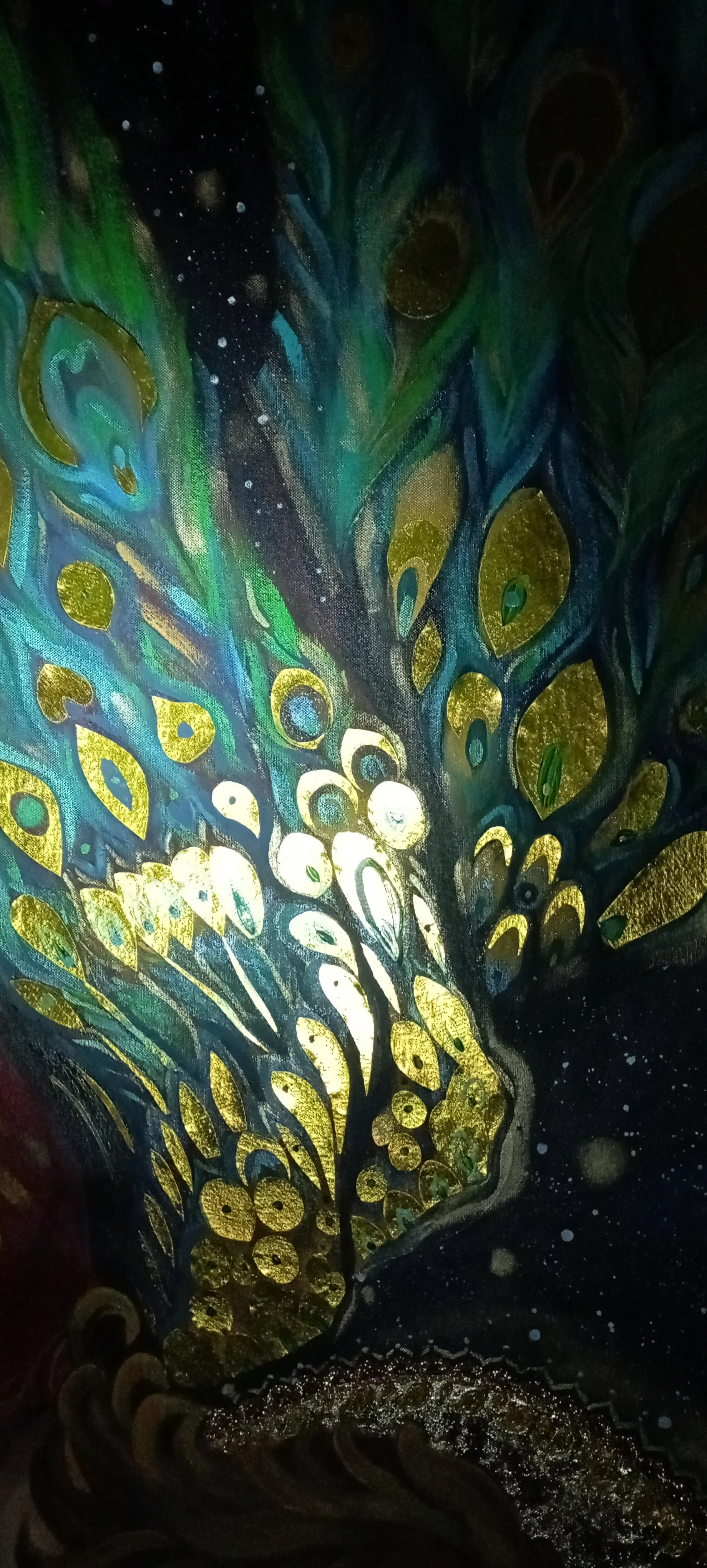
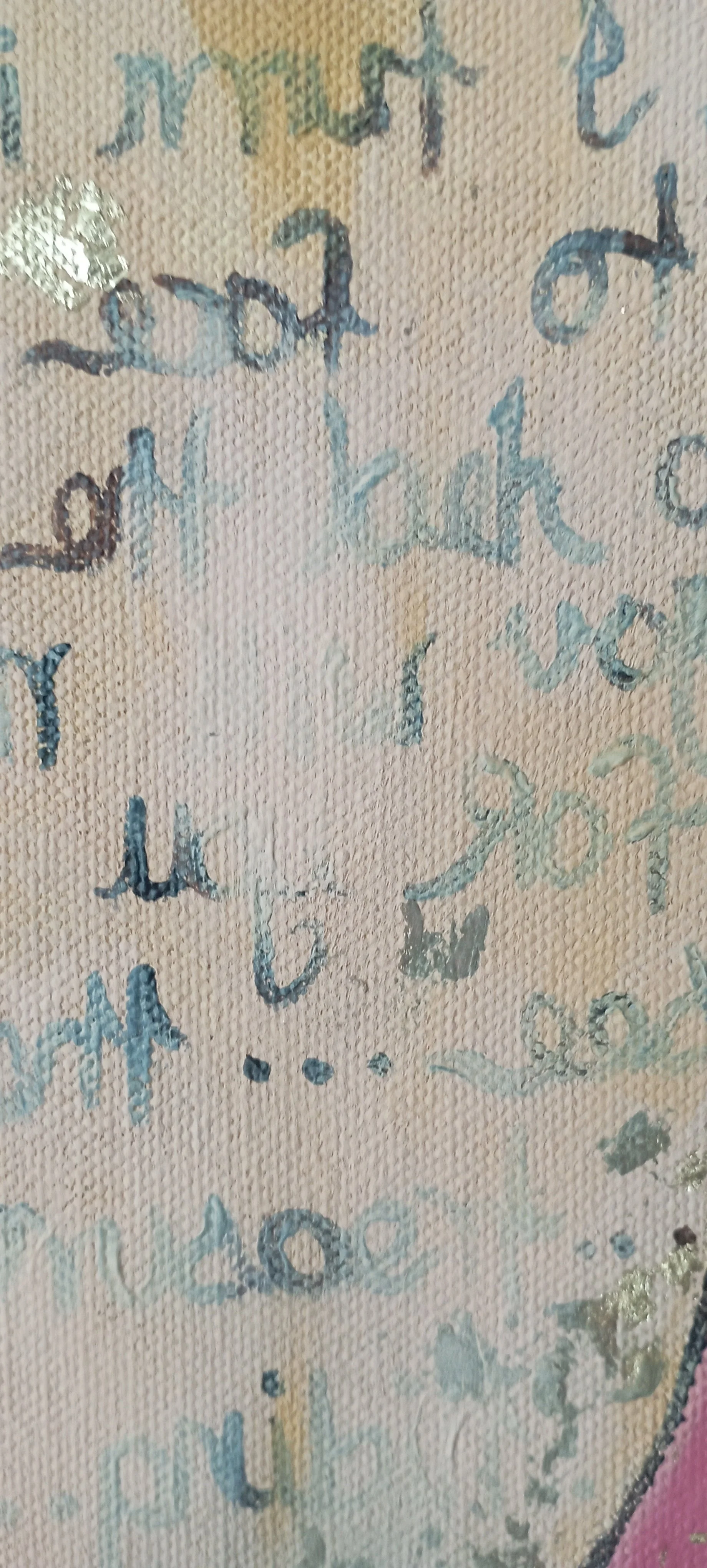
I have also been experimenting with the illumination of these works using a variety of light sources, and have been developing a contemporary twist on illuminated manuscript text by embedding my own symbols—such as the Om sign—using layers of joss paper. This practice is informed by and reflects an understanding of the quiet peace that accompanies the realization of the impermanence of all things. Subverting the institutional intention behind the historical visual language of illuminated manuscripts, which I have carefully researched and closely studied. Resulting in my interventions.
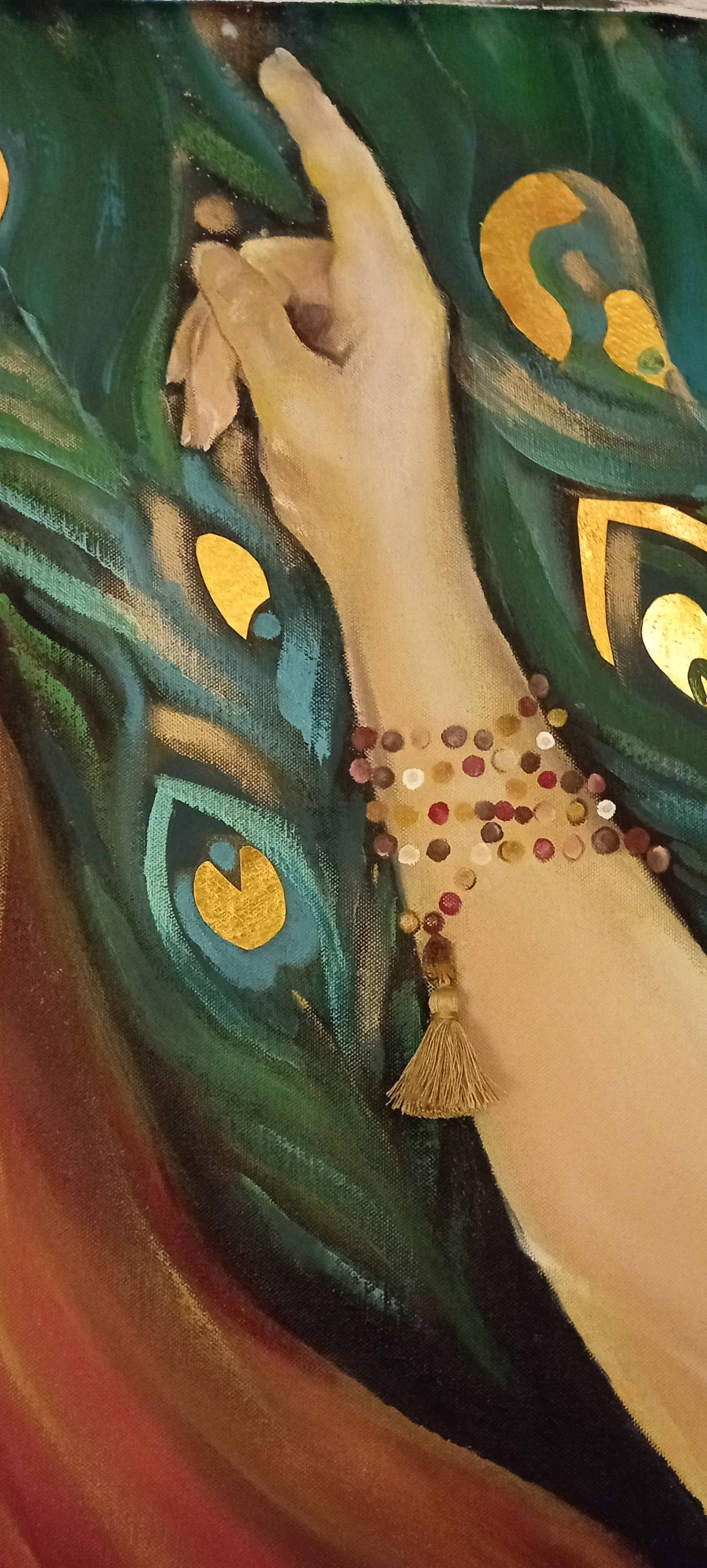
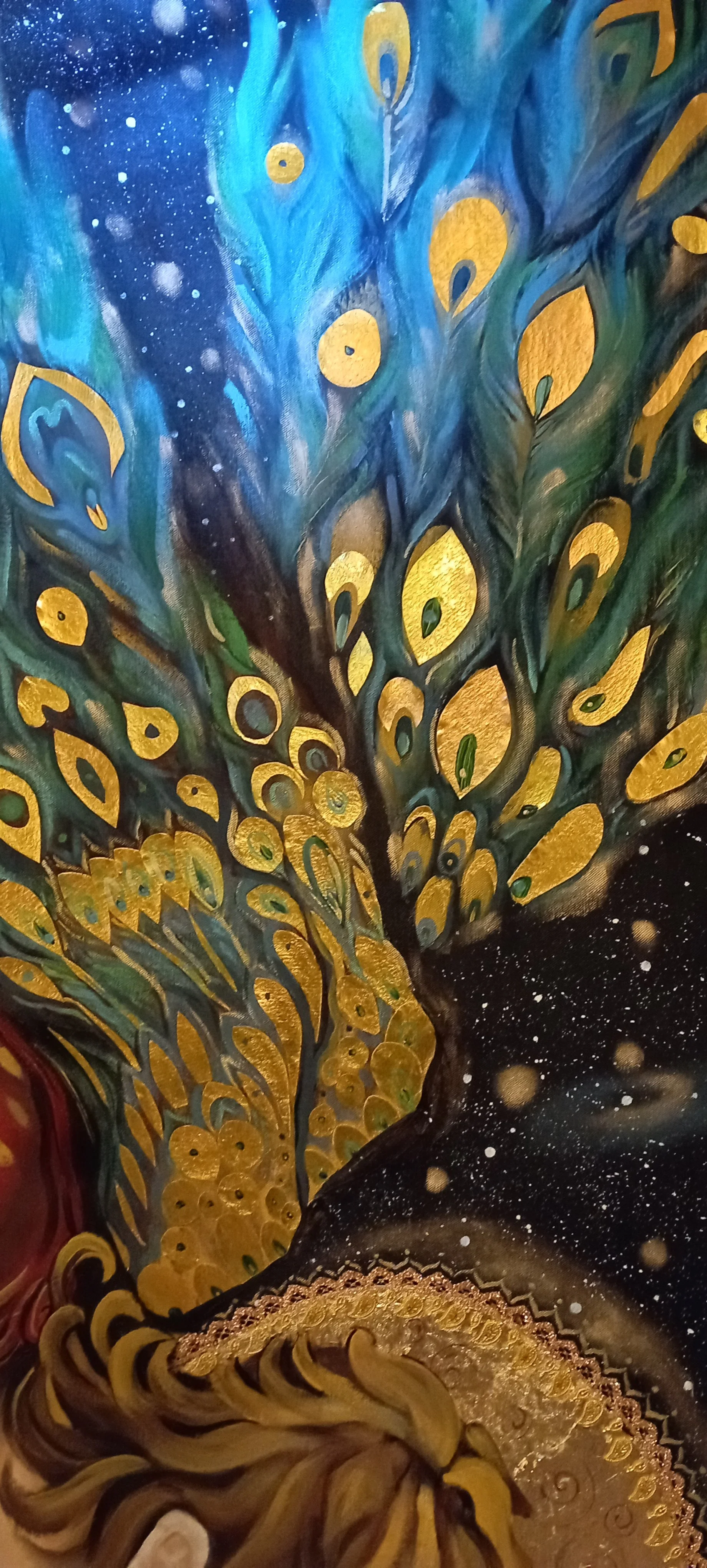
We cannot be sure if the fire (dark) angel is floating or falling. Furthermore, peacocks are flightless birds. I feel the feathers represent the third eye, or all seeing eye. I also like to obscure text.
The white angel on the left hand side is more overtly influenced by typically traditional Catholic iconography, and I like the juxtaposition between the two angles viewed together. More apparently yin and yang and compliments our dual nature.
We are all source, and gold essence is my expression of beings transcending and returning to source depicted as Sophia’s spark. Sophia is the Aeon of creation and divine wisdom in Gnosticism, and we all possess her divine spark.
This is my first project post M.A., and it continues to build on important themes I was exploring during my Masters. I have also been partly inspired by The Fold by Gilles Deleuze whose philosophy on Deterritorialization and Reterritorialization has resonated. It is about displacement.
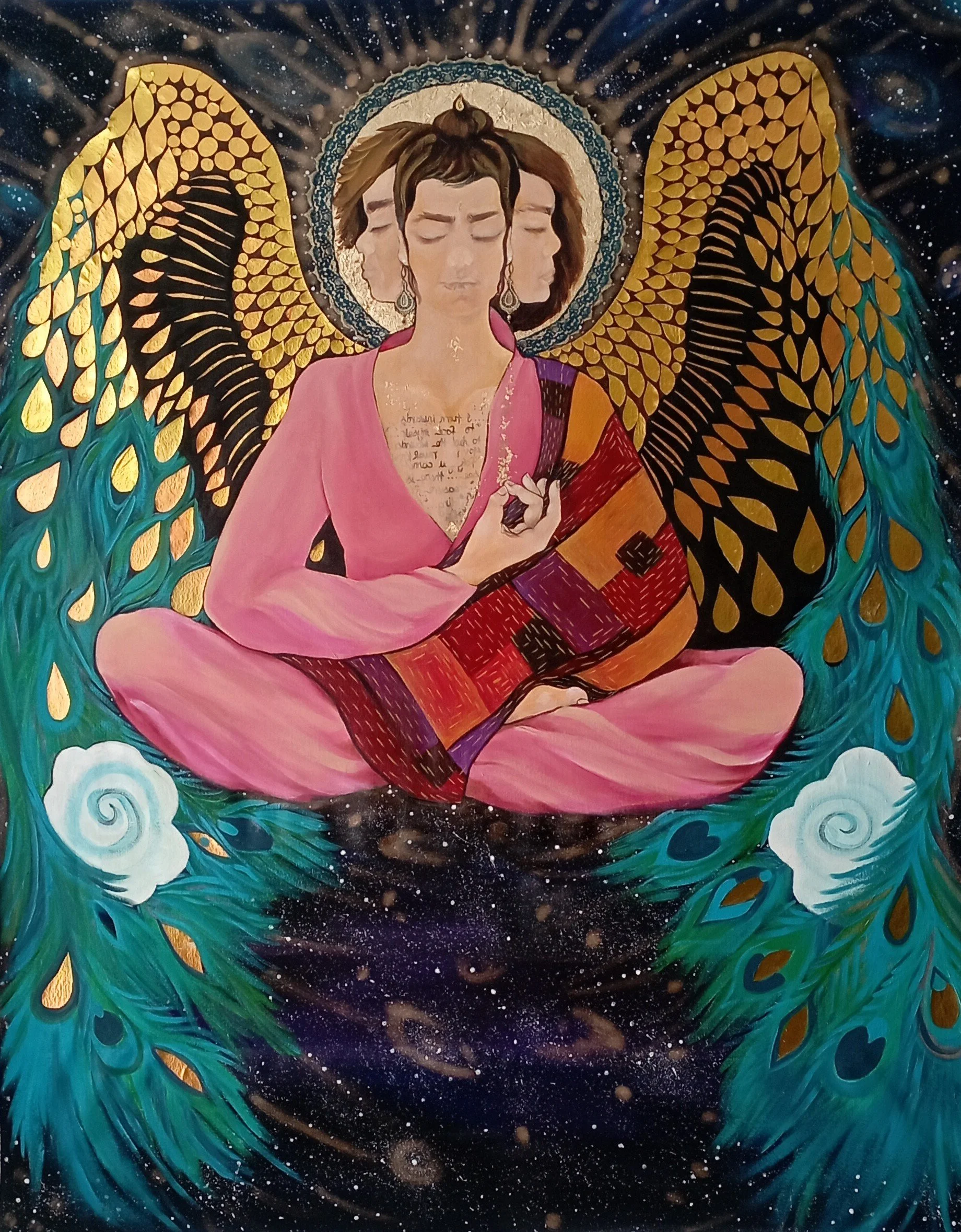
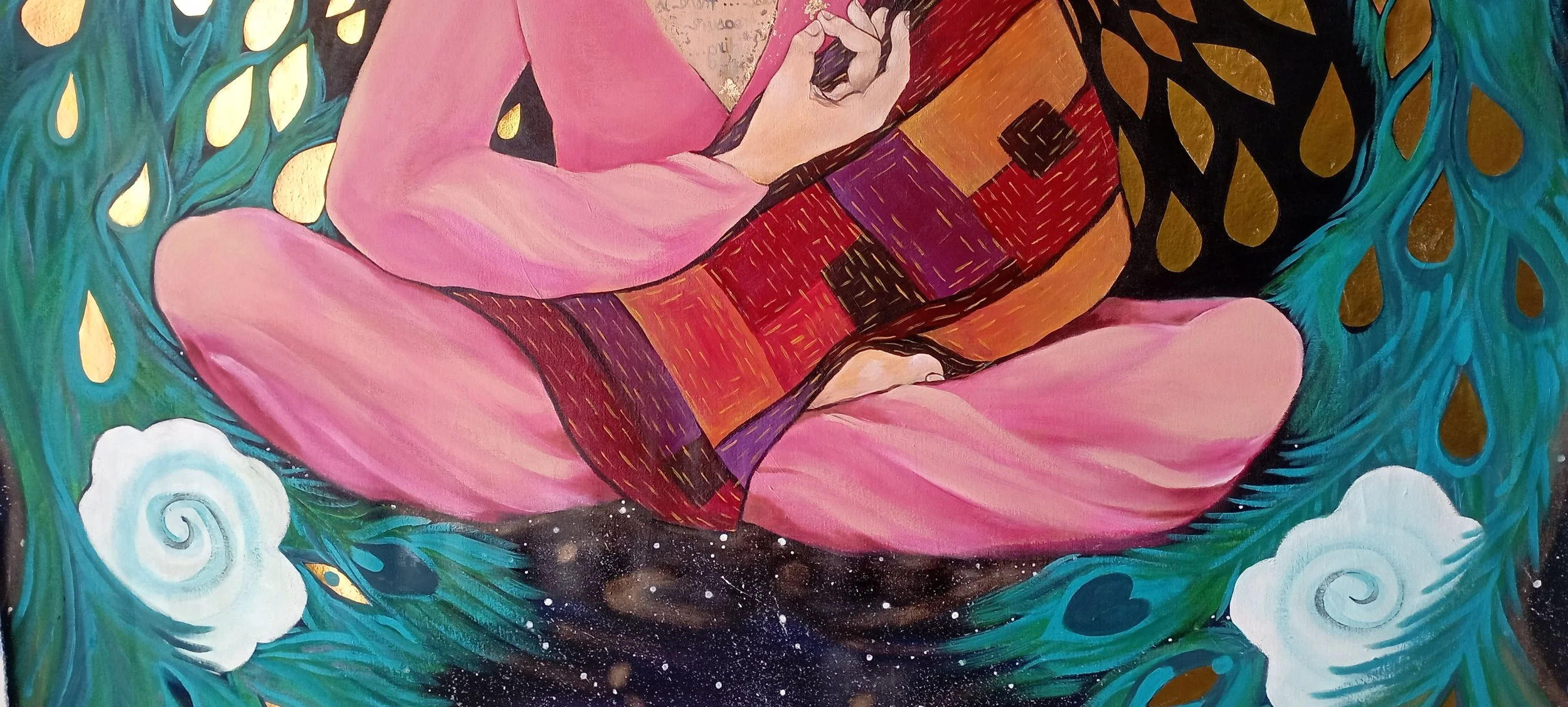
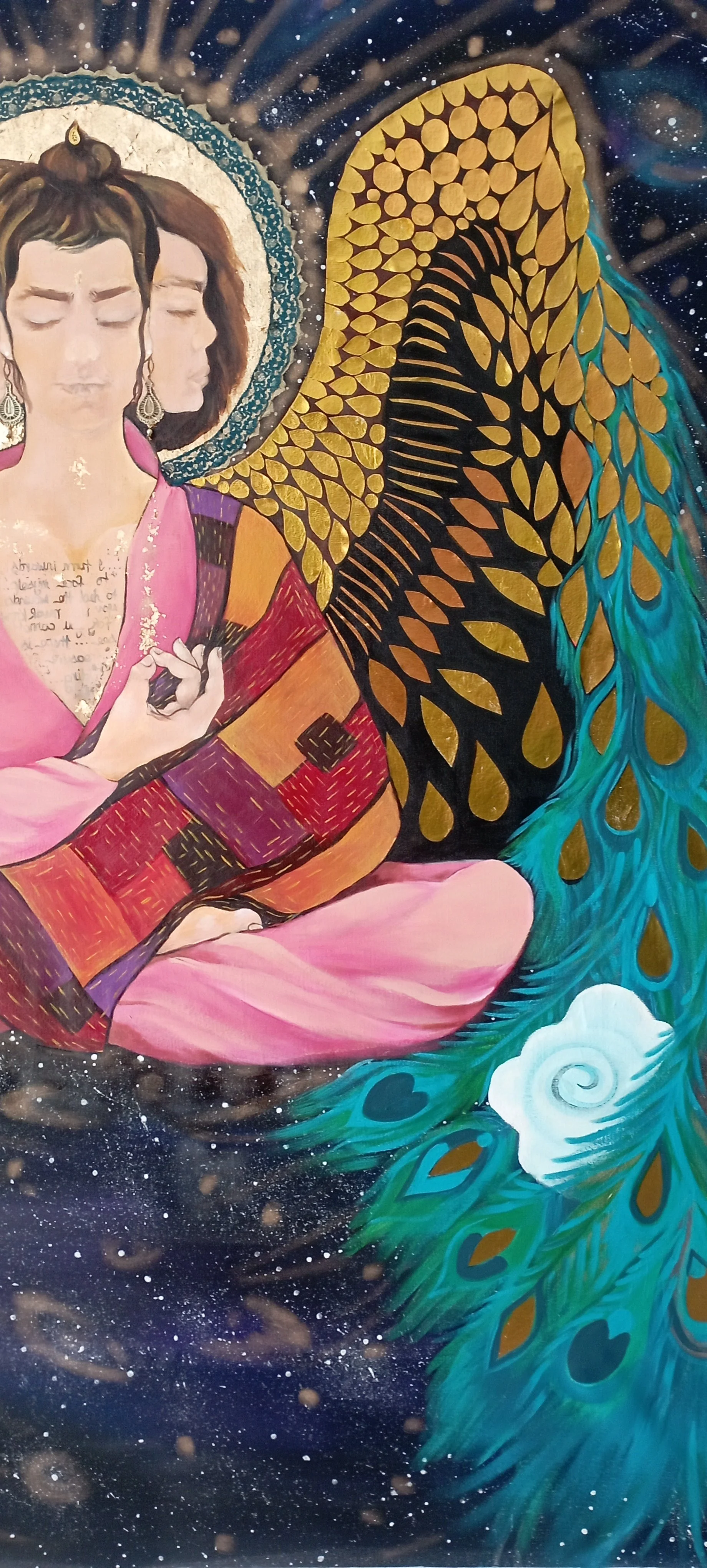
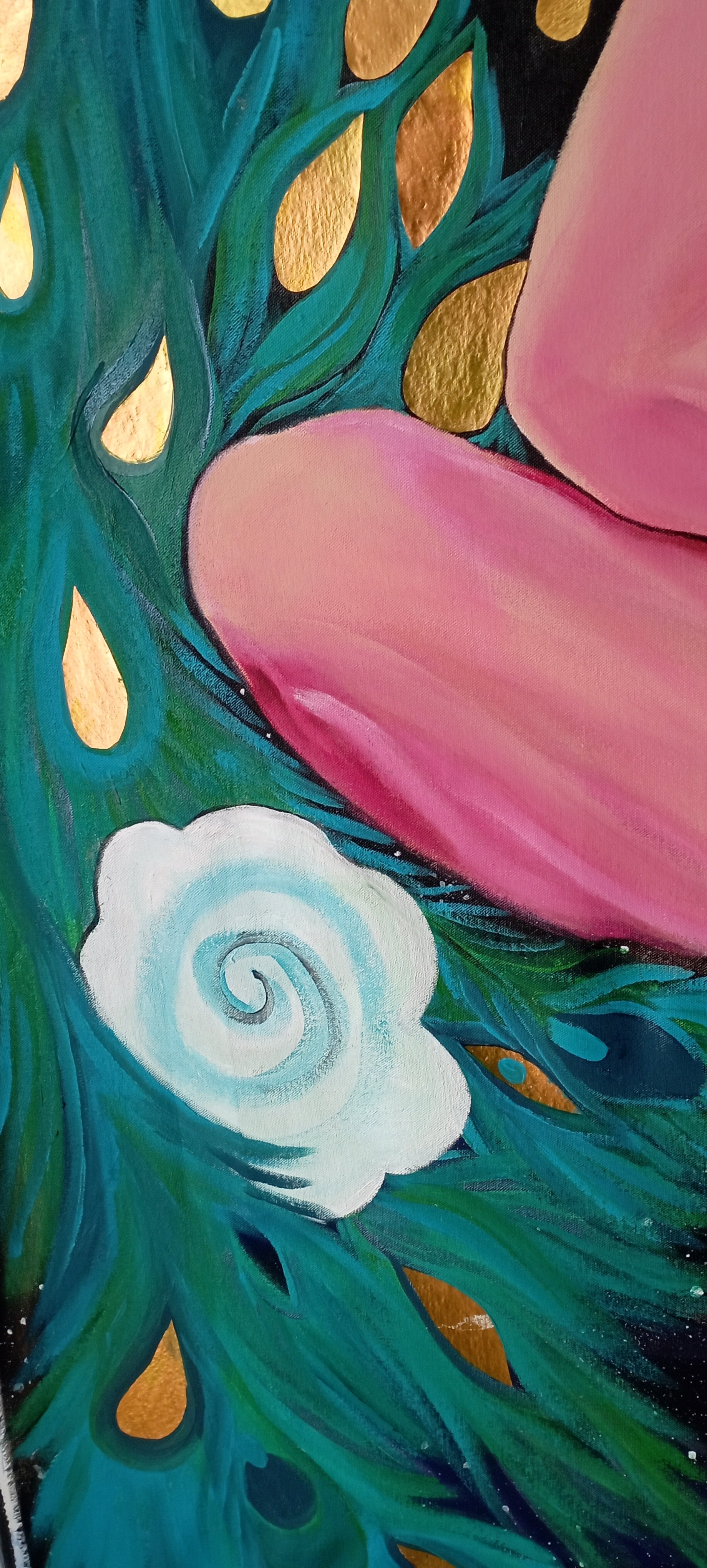
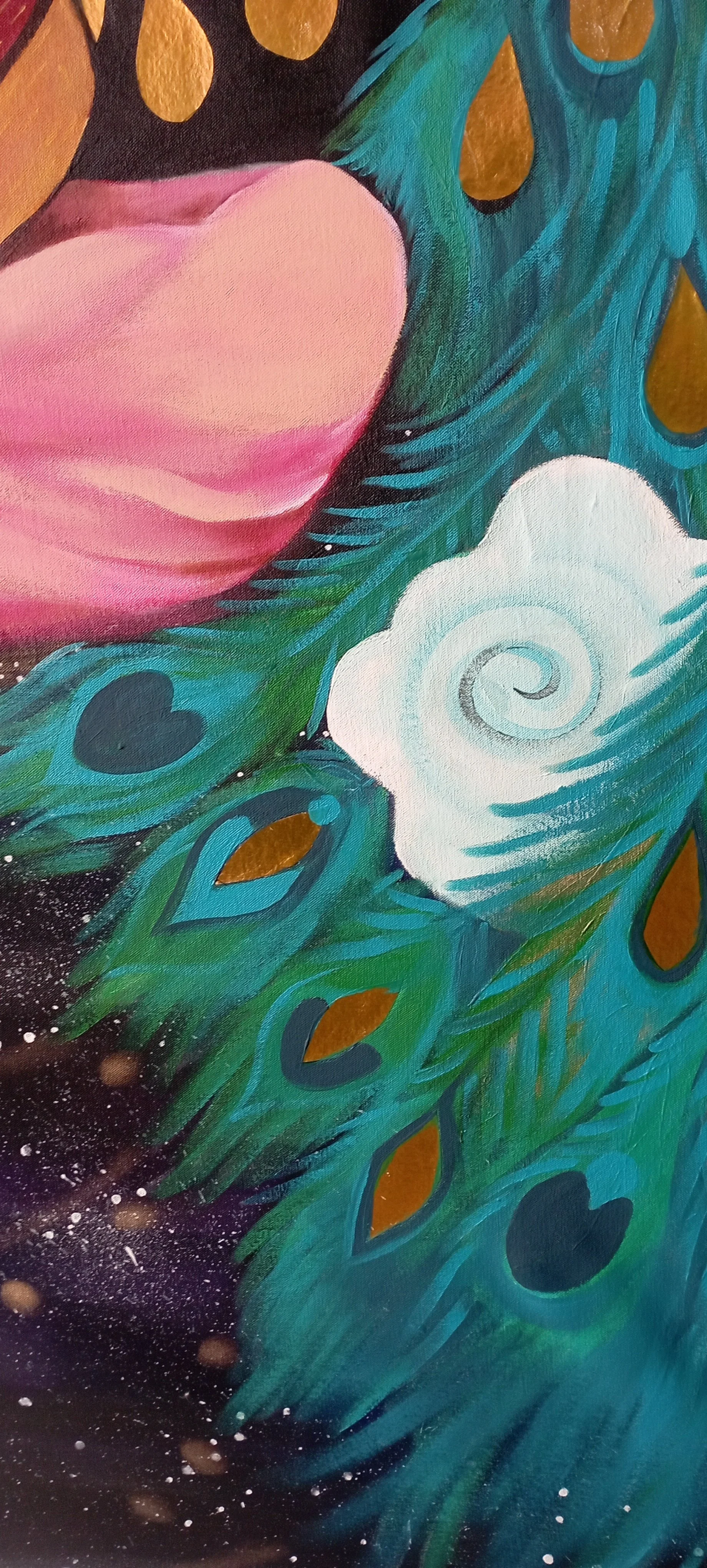
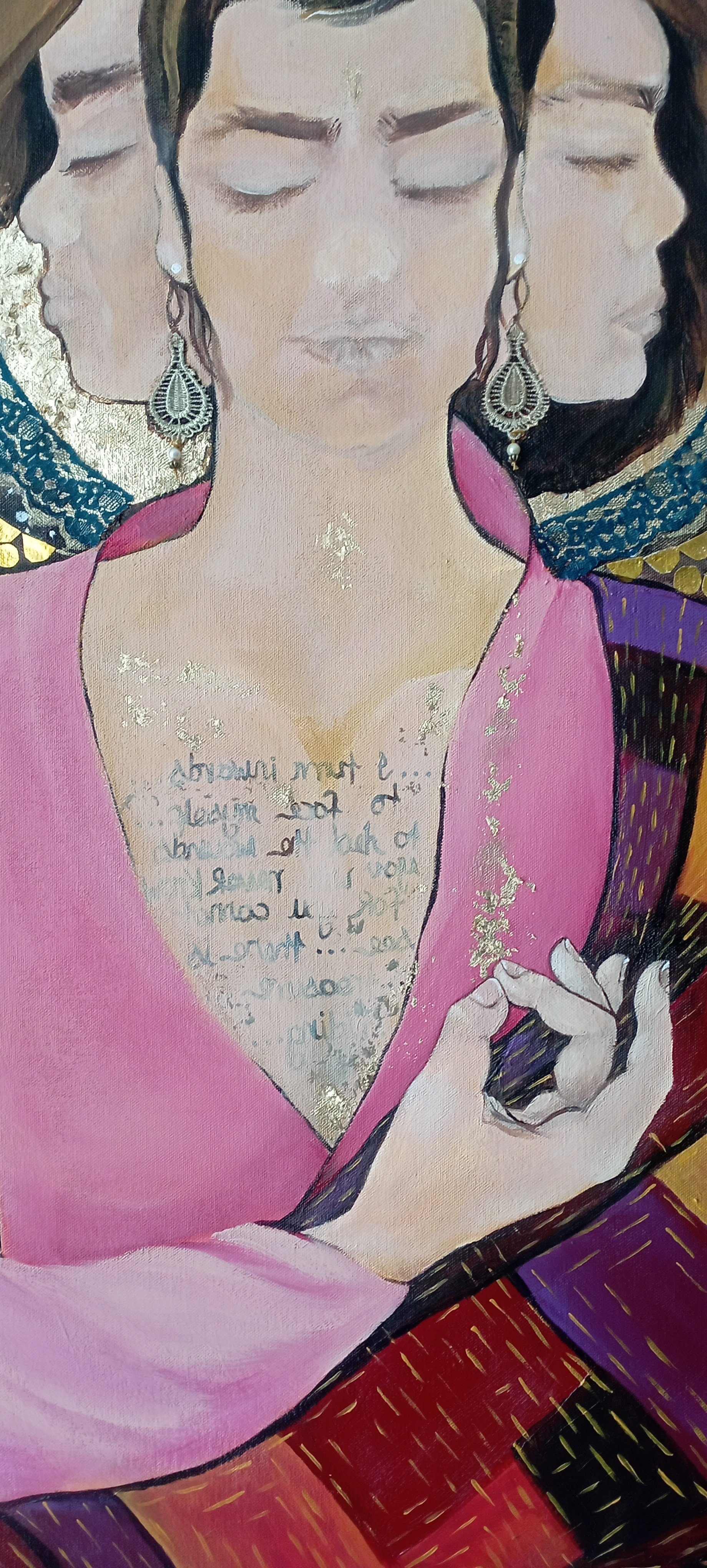
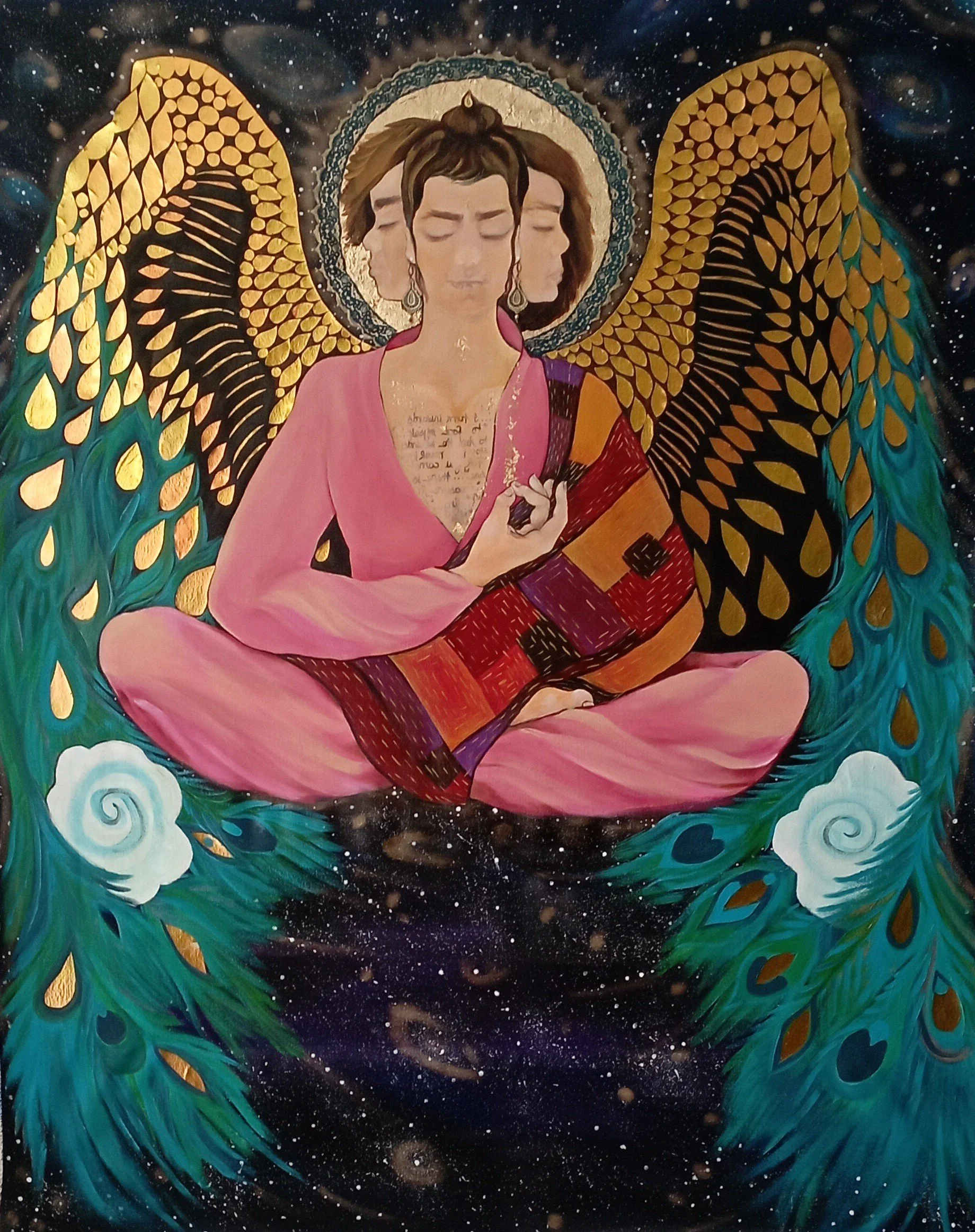
Title: Source (Cosmic Oneness). 20/02/2026
Length: 1.84m x Width: 1.50m.
Joss paper, lace, gold gilding, pearls and acrylic on unstretched canvas.
The shawl around my figures left shoulder is called a Sanghati and is one piece of what is known as the ‘triple robe set’ worn by Buddhist monks. The patchwork pattern is called the ‘rice field’ pattern and symbolises simplicity, humility and rejection of material attachment. I have been greatly motivated by a group of Buddhist monks on their mindful walk for peace across the U.S.A in recent months.
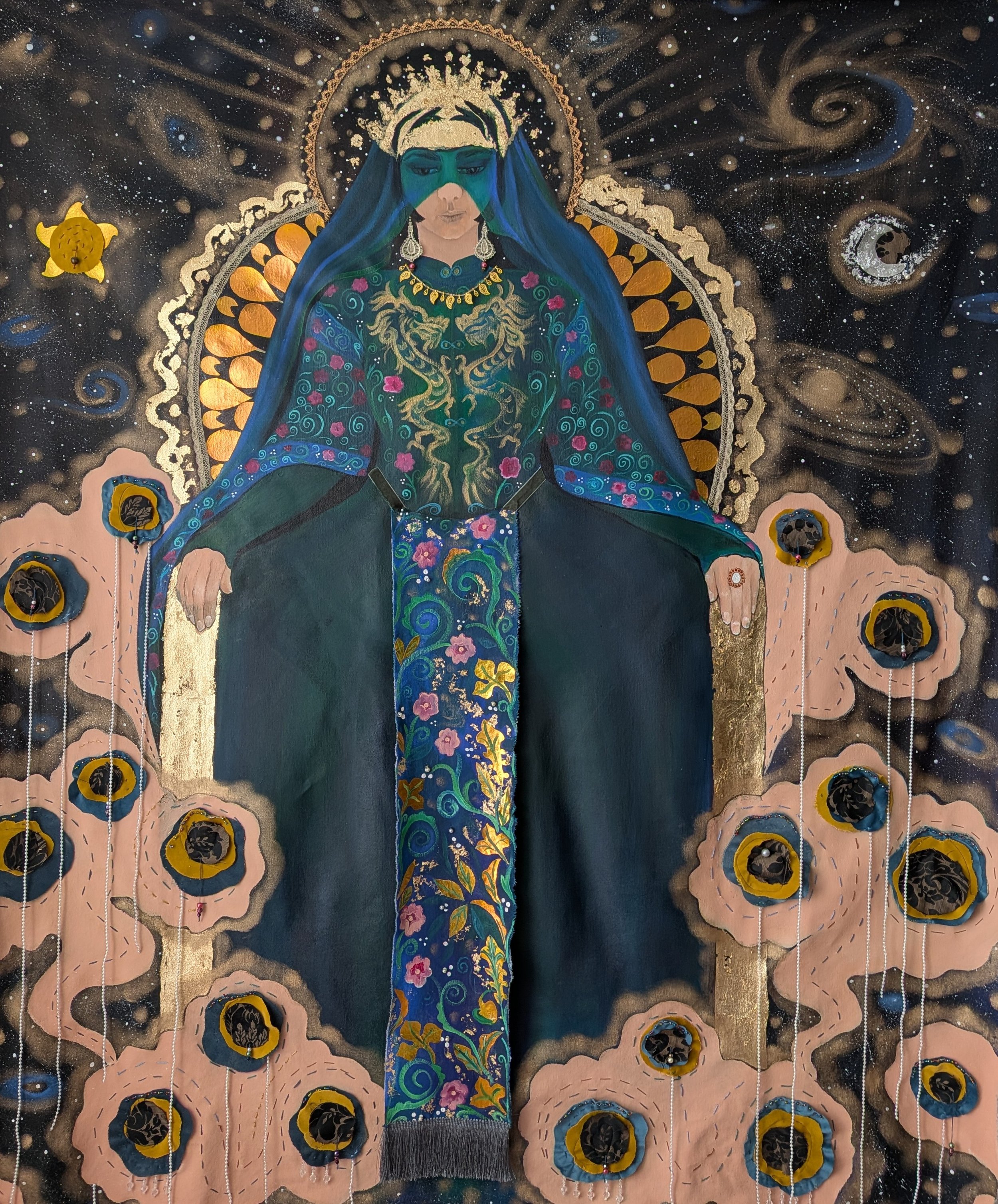
“Sophia wisdom” (2026)
Acrylic, textiles, embroidery thread, gold gilding, joss paper, pearls and beading on canvas.
Dimensions: L 2m x W 1m 53 cms
Masters Project.
The Dream Scene Installation (2025) at Cambridge School of Art. United Kingdom.
Title: The Mysterious Female Settles Her Dust and Finds Refuge in the Three Jewels.
Description: Installation that fuses Buddhist and Taoist concepts creating ‘The Ultimate Destination’ conceived as a Dream Scene. My work is frequently described as immersive. I wanted to submerse viewers even more in my work and amplified this immersion by drawing on Ilya Kabakov’s theory on installation.
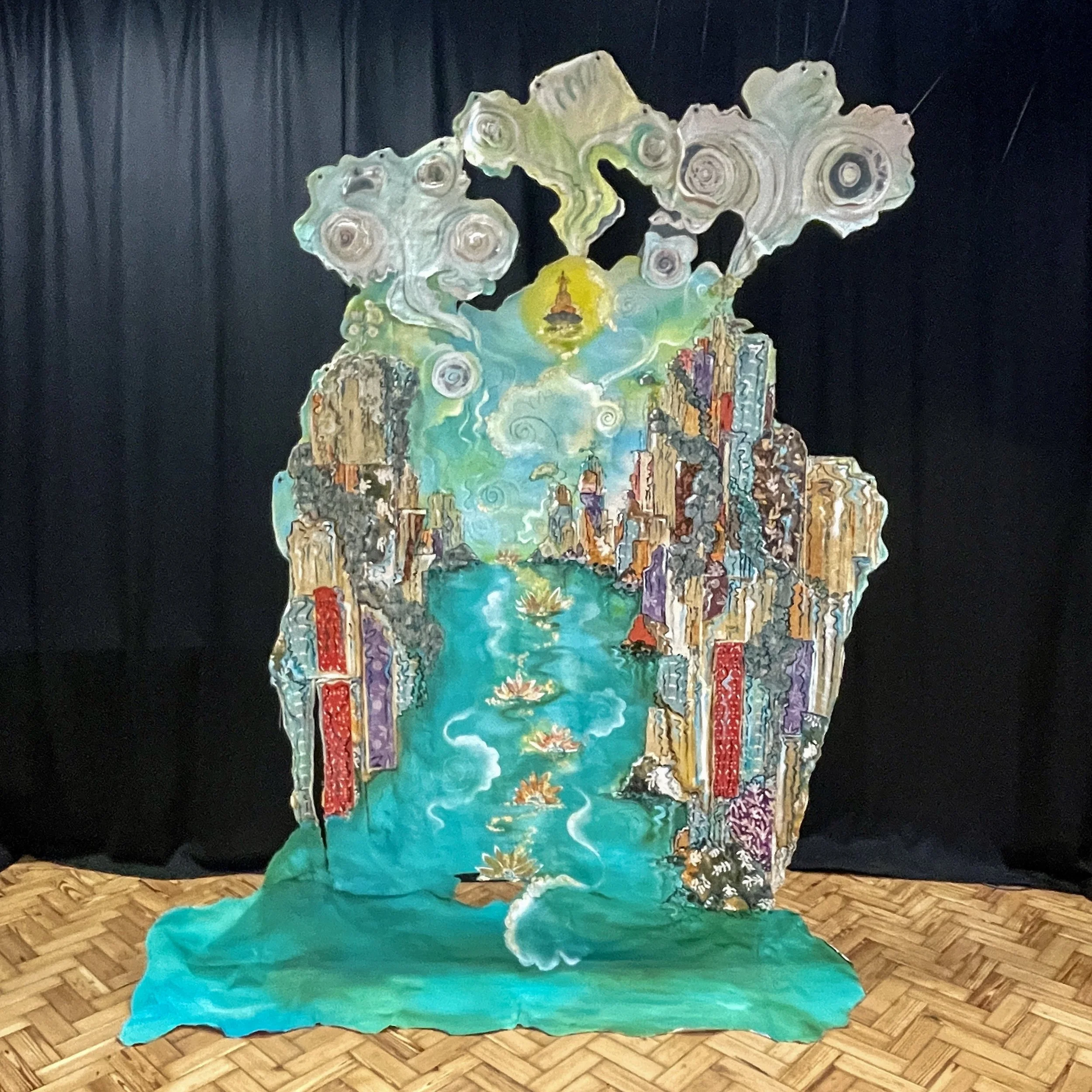
First piece installed. I used fishing wire to suspend my work from rigging attached to the ceiling. I wanted the hanging pieces to appear to be free-floating, leaning into the dream scene effect and the theatricality of this work.
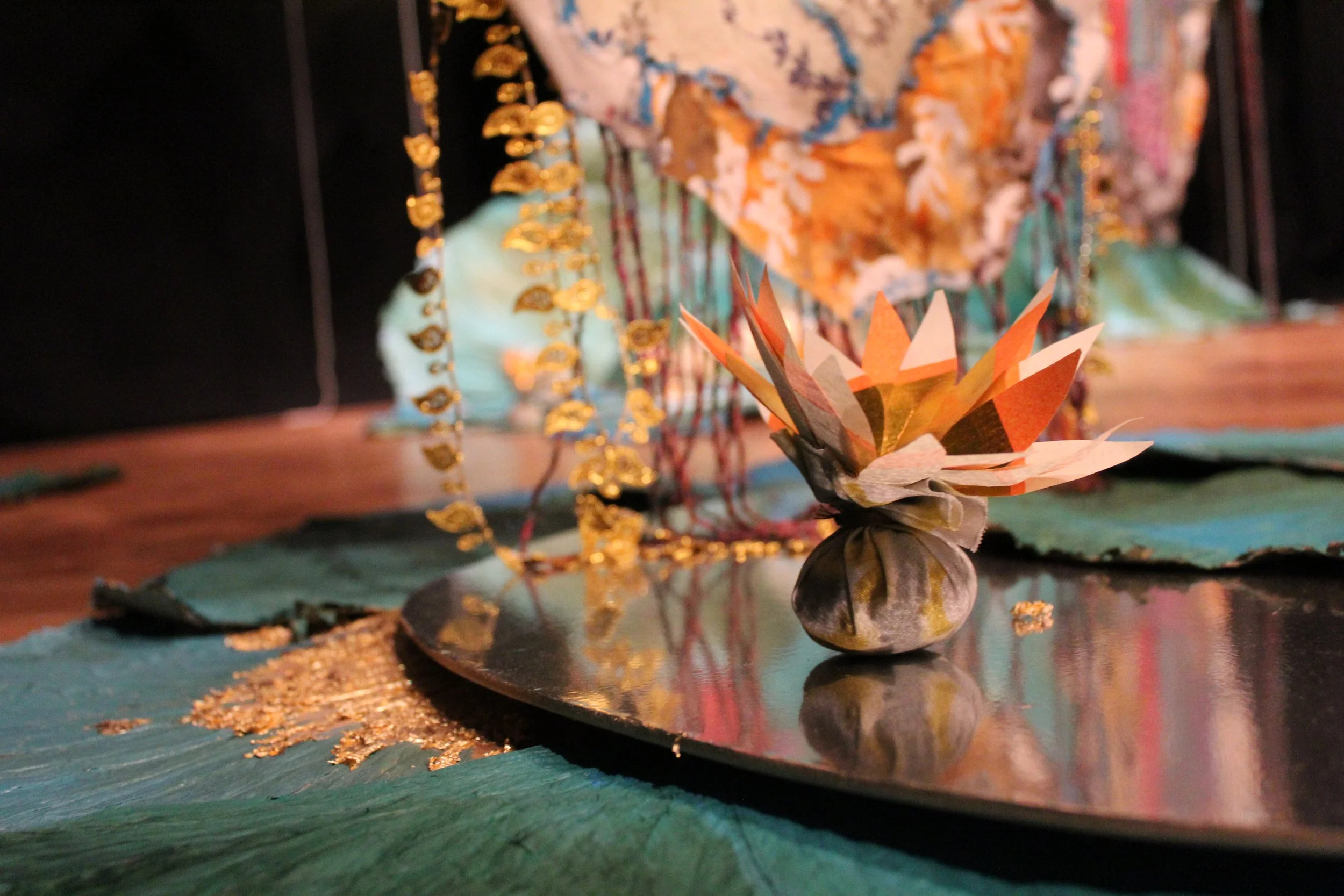
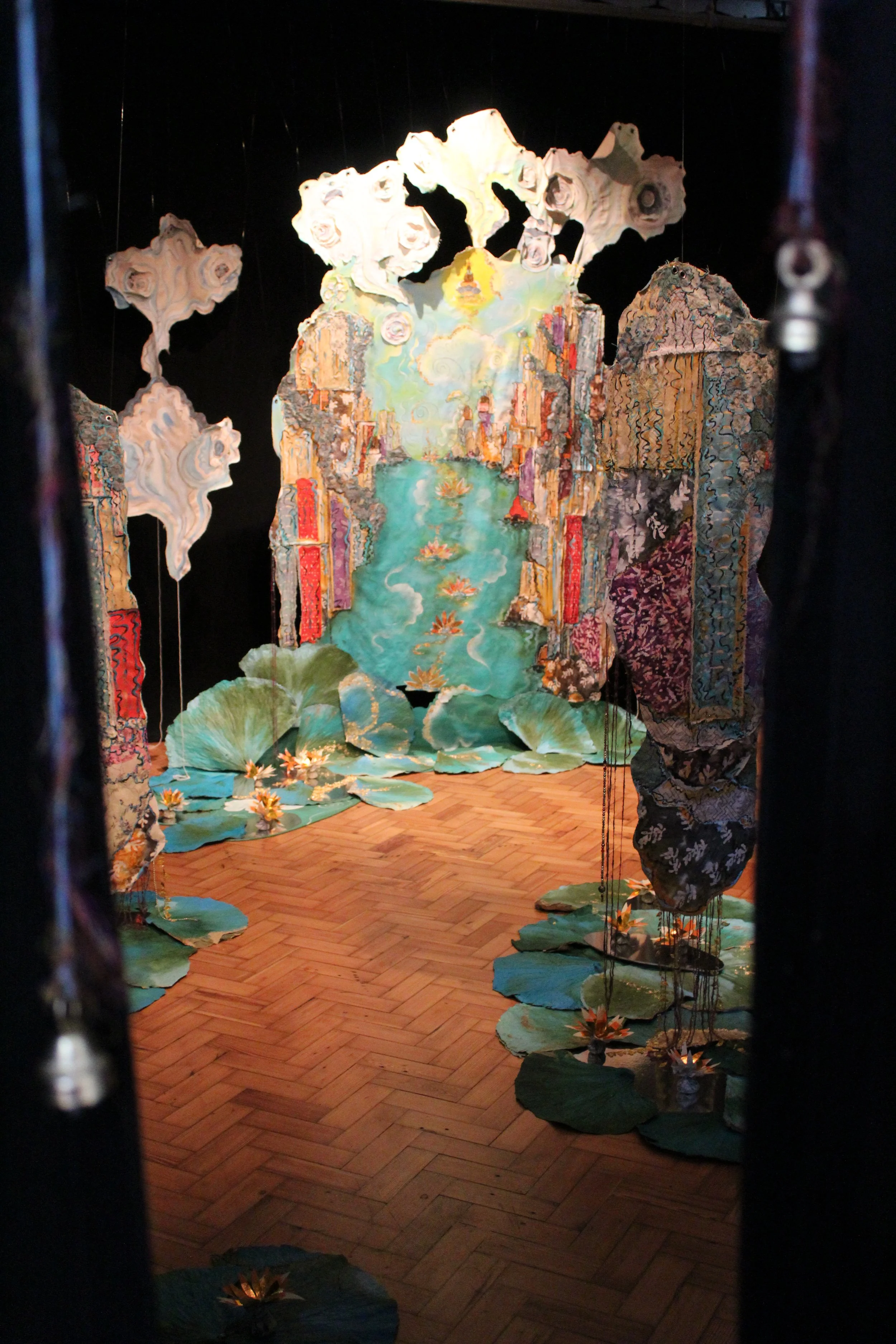
Installation detail.
Entrance to my dream scene installation.
For more images of this installation please see Portfolio 1 and TeN in Exhibitions section. Thank you.
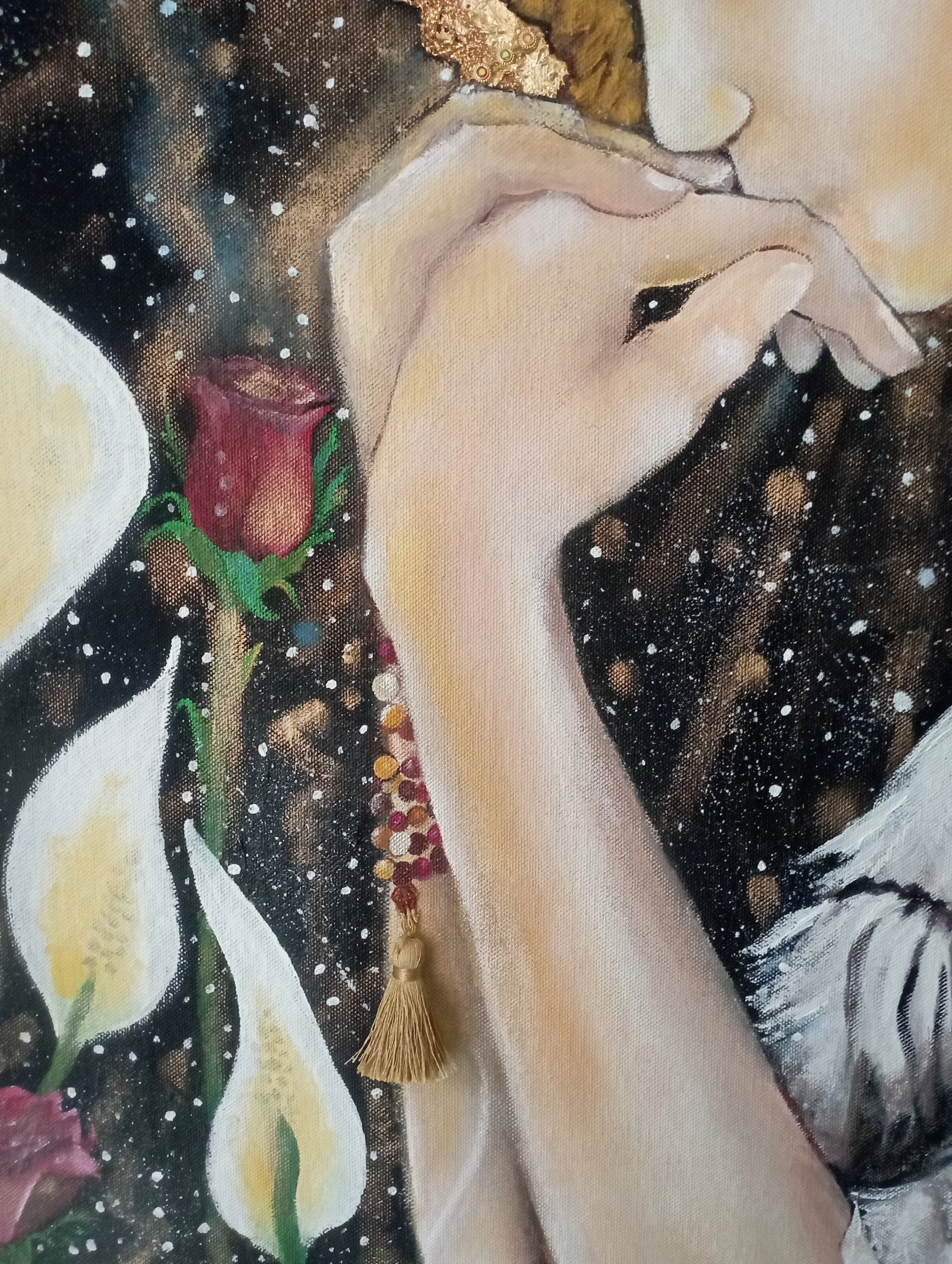
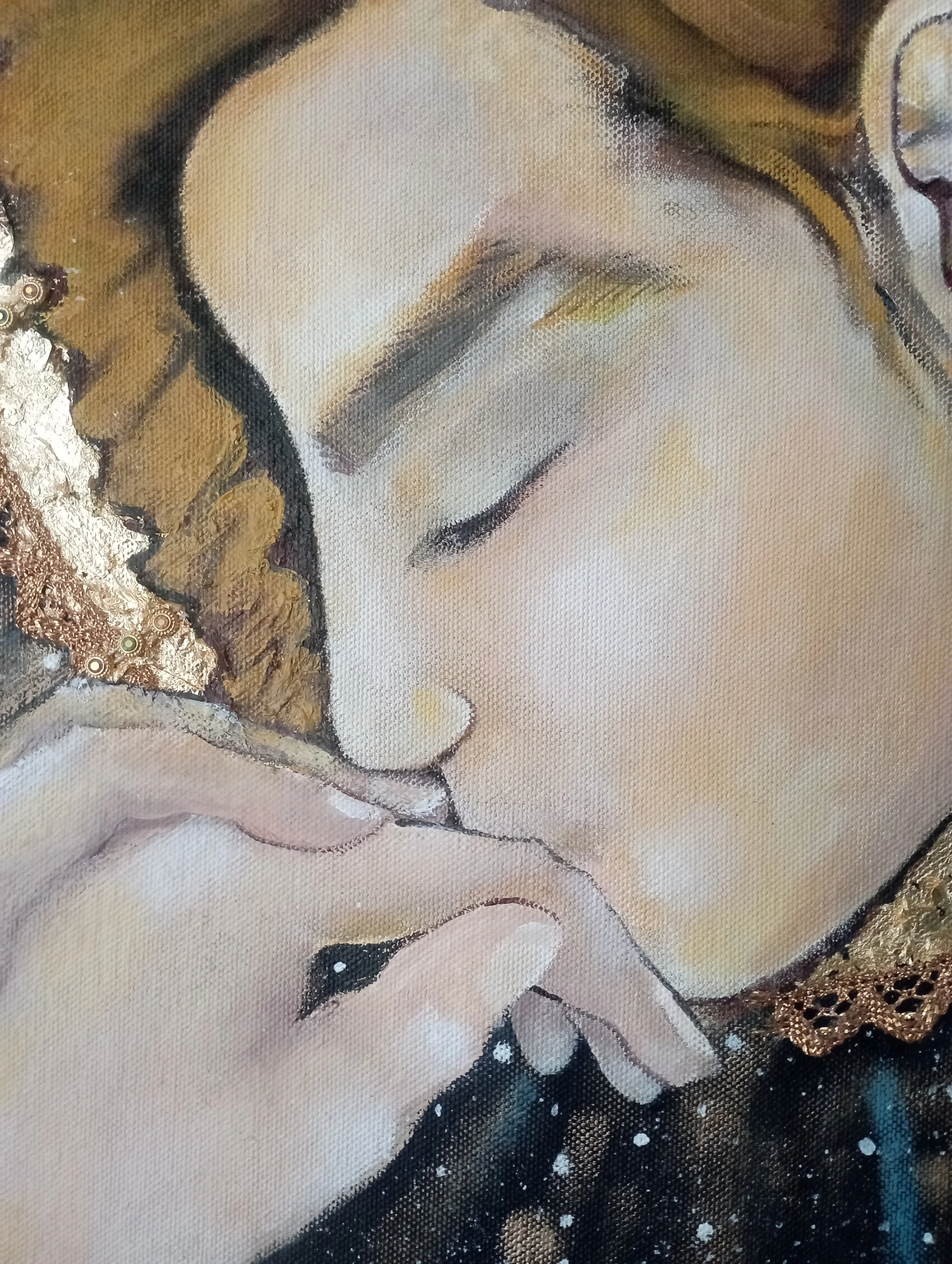
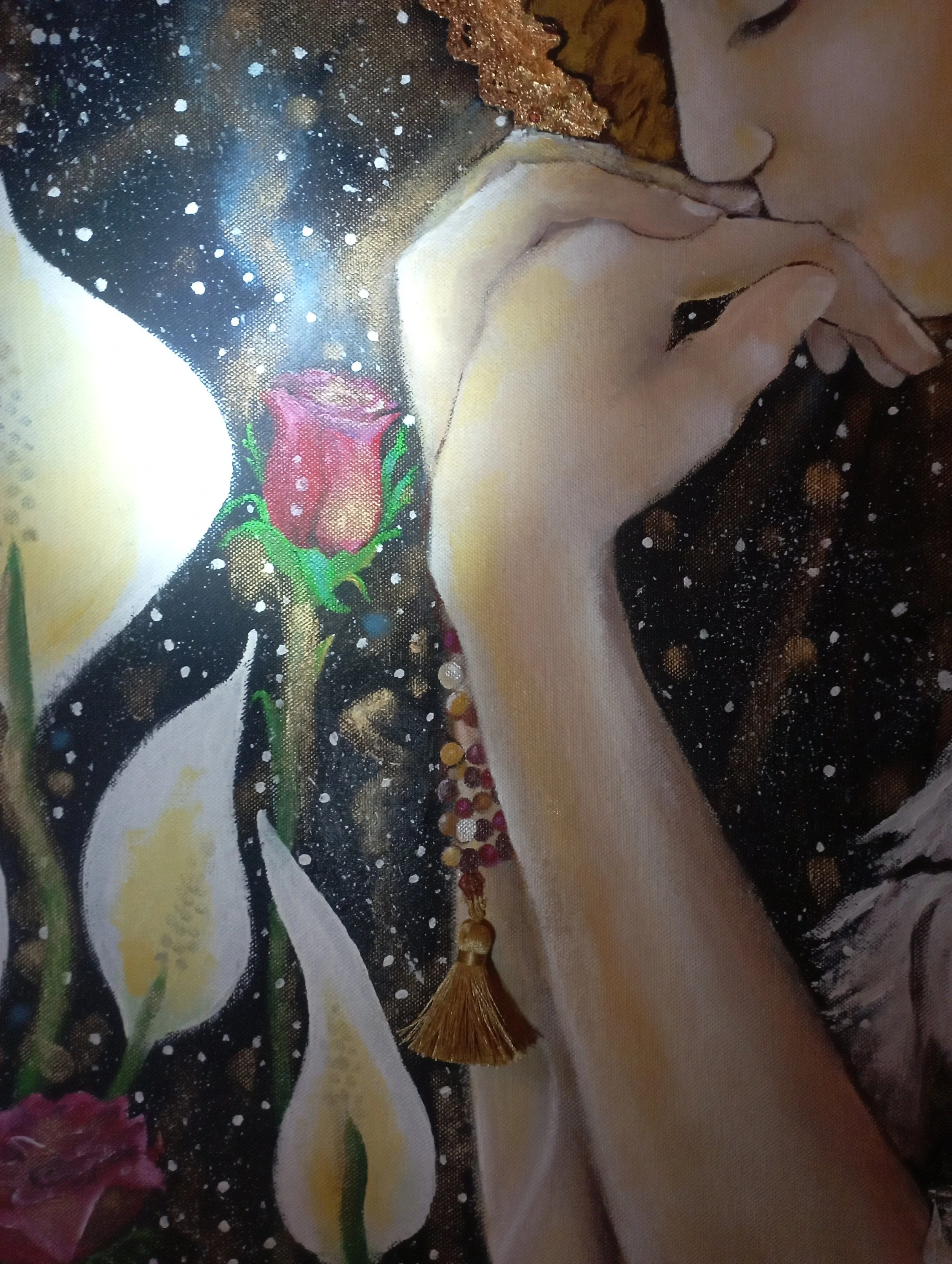
Details.
Details.
Follow us on social @nattieart
Contact Me.
nattieart@hotmail.com